

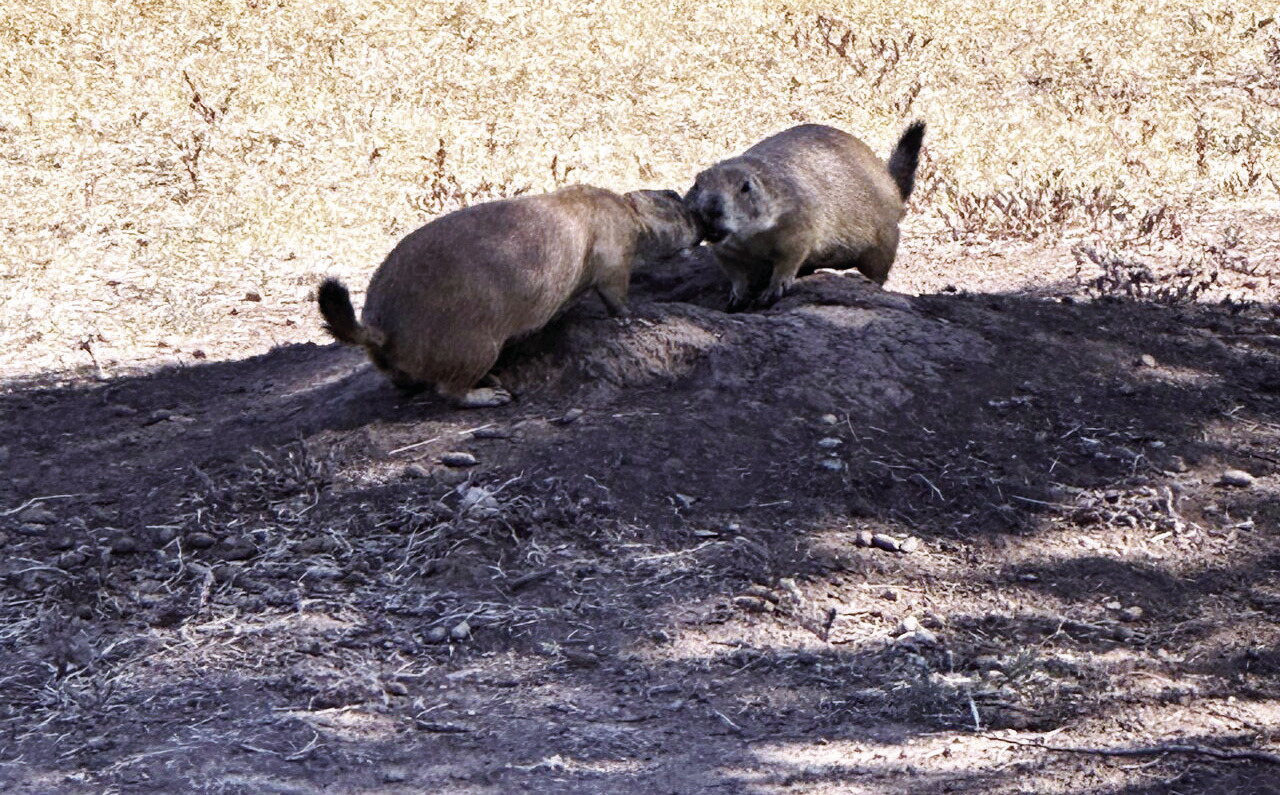
LAWTON – Lawton’s prairie dog population will be thinned out soon, to be rehomed in three western Oklahoma locations, Parks and Recreation Director Larry Parks informed the City Council.
“Our intent is to relocate, not exterminate,” he said.
The City of Lawton “has always designated some portion of lands to maintain black-tailed prairie dogs,” he said.
Prairie dogs are a “keystone species,” Parks said, because they:
• Play an important role in maintaining the prairie ecosystem.
• Create habitat and shelter for other species, such as burrowing owls and black-footed ferrets.
• Are a food source for predators such as coyotes, snakes, hawks and eagles.
• Use their advanced “vocabulary” to alert other species when danger arises.
• Fertilize, till and aerate soil, leading to healthier grasslands.
Also, major herbivores such as bison and elk are linked to the presence of prairie dog colonies.
The mammals, which are cousins of squirrels, “support at least 136 other species through their various activities,” said Kristy Bly, a senior wildlife conservation biologist with the World Wildlife Federation.
However, the little rodents cause property damage and can be a health hazard.
They can spread diseases to other animals, pets and humans. Their burrows cause erosion and water loss in some areas, and they can damage vegetation. They also can undermine structures and roadbeds, and gnaw through cables and irrigation systems.
Parks said prairie dogs “caused almost $50,000 in damage at Elmer Thomas Park” from chewing through wires and damaging the light displays during Holiday in the Park. “That seems to happen nearly every year,” said Caitlin Gatlin, the city’s communications manager.
Another reason to relocate some of the critters is because limited resources can cause starvation and disease, resulting in failure of the entire colony.
The Lawton council identified a need to relocate a population of prairie dogs that are living on municipal parkland within the city. The presence of the prairie dog colony “has raised concerns due to overpopulation, public safety, environmental concerns, potential conflicts with planned development, and citizen concerns,” Parks related.
Four teams will use a suction truck and a couple of water trucks to force the prairie dogs out of their burrows and to the surface, where they will be captured and caged, Parks reported. “Active flushing is the best way to move them, because it doesn’t injure the animals,” he said.
The City of Lawton sent approximately 250 prairie dogs to Lubbock, Texas, in 1999, he said.
Sometime in October and again in November, some – but not all – of the Lawton prairie dogs will be moved to three locations in Oklahoma, Parks indicated:
• The 29,766-acre Sandy Sanders Wildlife Management Area in Greer and Beckham counties, administered by the Oklahoma Department of Wildlife Conservation.
• Cooper WMA northwest of Woodward.
• Cimarron Hills WMA, which covers 4,200 acres in Woods County.
The ODWC will be on site to supervise the relocation efforts, and the project will be coordinated with landowners and local authorities, Parks said.
Efforts are made to transport prairie dogs in family units, because the animals live in tight-knit family groups called coteries.
One challenge of rehoming prairie dogs is ensuring that a new site can support a viable prairie dog colony. For example, the City of Lawton “sent 60 to 80 of them” to the Wichita Mountains National Wildlife Refuge last year, but – ironically – “they didn’t survive,” Parks said.