

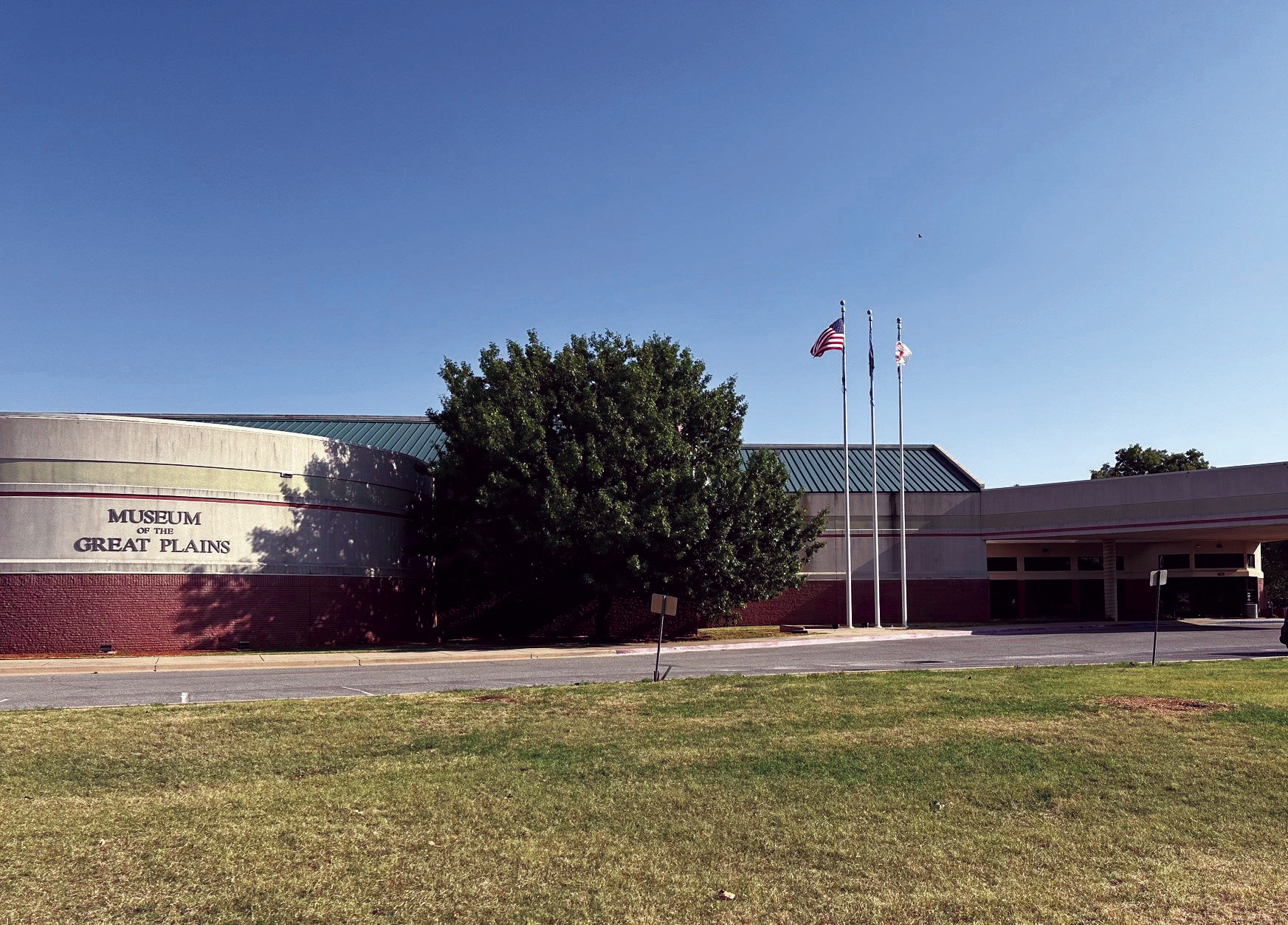
LAWTON – The City Council voted recently to pay C.H. Guernsey & Co. $400,686 to develop construction plans for preventing water leaks and fixing myriad other problems at the Museum of the Great Plains.
“We’ve been out there a few times, looking at several issues,” J.D. Clark, senior project architect with Guernsey architectural and engineering firm, told the council in February. “And there are a number of issues,” he added in an understatement.
The building opened in 1961, and a large addition completed in 1995 wrapped around the building on two sides, Clark related.
Methods used during construction of the addition “were common at that time but are no longer used due to several common issues.” In addition, he said, a few items were never installed correctly. “These issues combined have led to water infiltration throughout the building.”
And that “has caused additional issues with mechanical systems and the stucco-looking Exterior Insulation and Finish System. “They’re known to leak,” Clark said, and birds are nesting inside it.
The museum roof was damaged in the June 15, 2023, hailstorm, and water is seeping through the walls.
The best way to resolve these problems would be to “remove the exterior skin of the building,” Clark said.
Brick veneer was not installed with proper air gaps, a mortar deflection device or air and water barrier, he said. Combined, “These do not allow for proper air flow and water detention behind the brick veneer.”
Windows at the clerestory (gallery) were not installed with the correct flashing. “Several attempts to correct this problem have made the leaks worse.”
To solve those issues, repair the existing sheathing as needed, provide a new weather barrier and flashing, add a layer of continuous insulation, then employ new finishes, he recommended.
The standing seam metal roof and flashing have begun to rust through and should be replaced, Clark said. Air conditioning units on the roof are rusted and some were damaged by hail.
The thermoplastic olefin roof membrane was damaged during the hailstorm last year. Replace the membrane and install a new weather barrier plus insulation, he advised.
Damage inside ‘pretty significant’ “There’s pretty significant damage inside,” Clark said.
For example, because of the water infiltration, mold is growing in the building and there is “substantial damage to finishes throughout the museum,” he said.
Walls need to have damaged gypsum board removed; if plywood backing is damaged, it too needs to be replaced. Approximately 25% of the drywall in the building ought to be replaced.
Carpet has been damaged by water “and has reached the end of its life,” Clark said. Carpeting ought to be replaced throughout the museum “since it cannot be matched” with anything on the market today. The carpet was installed in the 1990s, so it’s three decades old.
In addition, vinyl composition tile flooring also has been damaged by infiltrating water and needs to be replaced.
Acoustical panels in the auditorium have been damaged by water. “This wall covering would need to be replaced and surfaces behind it would need to be repaired before they can be replaced,” Clark said.
Similarly, acoustical ceilings throughout the building have been water damaged and need to be replaced “so all of them will match.”
Plaster is “bubbling” and soffits, too, have water damage. With all of the water infiltration, the humidity “has never been controlled,” Clark said.
Ductwork needs to be cleaned. Mechanical systems have never worked properly, and some of the electrical system will have to be upgraded.
Guernsey consultants developed two options for city officials to consider.
• Option 1 would simply be “replace likefor- like,” the council was told. That proposal would cost a little over $6 million.
• Option 2 would entail replacing damaged materials with new products. That would cost an estimated $5,785,546 and would take 12 months to complete. That option “would be cheaper but would provide a more durable building and would require less maintenance,” Clark said.
The City Council chose Option 2. Guernsey is providing the architectural and engineering services, will prepare the necessary construction documents, and will manage the bidding and construction phase.
PROPEL 2040, the six-year extension of a 2.125% capital improvements program sales tax Lawton voters approved for 15 years in PROPEL 2019, includes $6 million for the museum rehabilitation project.