

Bill would bolster probes in cases of murdered, missing Indigenous women
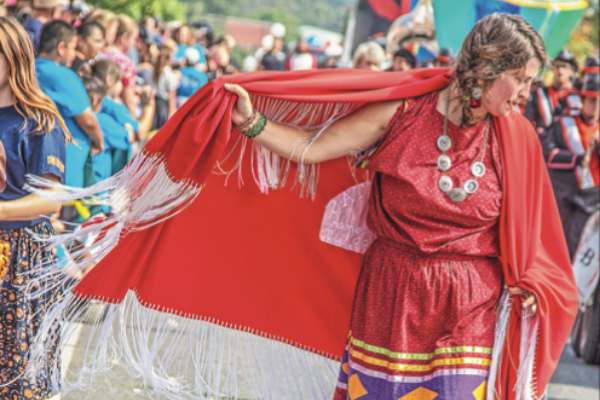
The mother of a slain Native American woman fully supports passage of a legislative measure that would bring law enforcement agencies together to investigate cases of missing and murdered Indigenous people.
Renae Toahty, a member of the Comanche Tribe in Lawton, experienced the worst feeling when she was told on Jan. 16, 2017, that her 21-year-old daughter Ci’Lina Deloney had been shot four times – once in the head - and her body was left in the middle of Northwest Paint Road between Lawton and Cache. The case has never been solved.
“We need other agencies assisting in these investigations,” Toahty said. “I want them (killers) off the streets. I don’t want to have to worry about my other daughter and my grandchildren.”
Oklahoma senators approved Senate Bill 172, otherwise known as Ida’s Law, named after 29-year-old Ida Beard from El Reno. Beard, a citizen of the Cheyenne and Arapaho Tribes, went missing in 2015 and has never been found. Sen. Paul Rosino (R-Oklahoma City) introduced the measure. The bill now goes to the state House for its consideration.
More than 220 American Indians are missing in Oklahoma, Rosino said. About 14 of those are from his Senate district in central Oklahoma.
“It’s a national problem, and it’s a problem right here in Oklahoma. One of the biggest issues is the lack of solid data, which is exactly what Ida’s Law would help us address,” Rosino said. “We had tremendous momentum for this legislation last session, but it was another of many important bills that the clock ran out on due to the COVID-19 pandemic. I’m encouraged and grateful for the Senate’s support this session.”
SB 172 directs the Oklahoma State Bureau of Investigation (OSBI) to coordinate with the United States Attorney’s Office and the Justice Department to obtain federal funding to create a database. The measure would also create the Office of Liaison for Missing and Murdered Indigenous Persons under the OSBI. The office would work with tribal, state, and federal authorities on missing persons and homicide cases, provide guidance to victims’ families, facilitate training, promote best practices, and consult with community organizations to promote community relations.
Toahty wishes this type of coordination would have existed four years ago when her daughter was killed.
“I’ve asked, requested for the OSBI to be brought in, but nothing’s happened,” she said. “I don’t know why they (investigators) won’t ask for an assisting agency. She (daughter’s case) is just another file on their desk.”
According to Toahty, investigators have questioned several people, “mostly meth heads,” but have never made progress.
“They don’t even know where the primary crime scene is,” she said. “I don’t want to make it a racist thing, but I do think my daughter being an indigenous woman has something to do with it. I don’t feel like they’re doing enough but that’s how it is with indigenous families. We (indigenous women) have been ignored for so many generations it’s terrifying to our women.”
Comanche County Detective Jack Pilgrim said he hasn’t received any leads or new evidence in about nine months.
“We don’t have anyone who was a witness. I’ve done 50 or so interviews but haven’t come across anything” that would identify a killer, he said. “There’s someone out there who knows something. This case is still sitting next to me and I haven’t put it away yet.”
Meawhile, Comanche Tribe member Jen Hadley said she “absolutely” supports the legislation initiated by Rosino. Hadley is president of the Missing and Murdered Indigenous Women (MMIW) Southwest Oklahoma chapter.
“I’ve been waiting for this law,” she said. “It’s way overdue. We have so many missing and murdered in Oklahoma and haven’t been getting the help we need to conquer this.”
There are more than 20 missing and murdered indigenous women from the Comanche Nation, Hadley said.
“This bill would really help Ci’Lina’s case. We need answers to these cases. There’s one case of a missing indigenous girl since 2008 and it’s never been solved,” she said. “We couldn’t ask for a better law. It’s universal to all the tribes in Oklahoma.”
Rep. Collin Walke, D-Oklahoma City, is the principal author in the state House.