

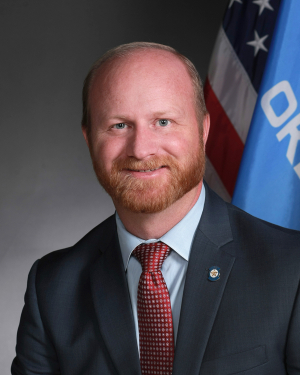
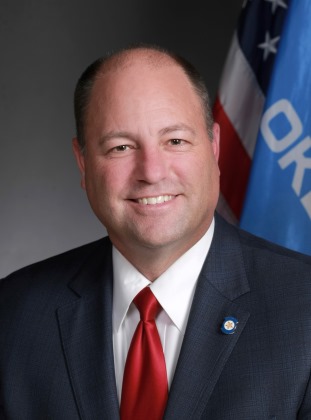
OKLAHOMA CITY – Interim legislative studies proposed by two southwest Oklahoma lawmakers will focus on measures to streamline the process for launching a new business in Oklahoma and on summer feeding programs for children.
“My day job is tax and estate planning as an attorney,” said Sen. Brent Howard, R-Altus. “For someone wanting to start a small business in Oklahoma, it’s a hassle because they have to go through multiple bureaus or commissions.”
Filing with the Secretary of State’s office “is the only easy one,” Howard said. An entrepreneur also has to go to the Oklahoma Tax Commission to fill out forms for payroll withholding and sales and income taxes, and go to the Oklahoma Workers’ Compensation Commission to secure insurance coverage, and obtain various state and local licenses, the senator noted.
BUSINESS START-UP PORTAL
“What I propose is a business start-up portal hosted by the Secretary of State and posted on their website,” Howard said. That study was assigned to the Senate Committee on Business, Commerce and Tourism.
Sen. Paul Scott, R-Duncan, was authorized an interim study of summer feeding programs for children. About one-in-five Oklahoma children are classifiedas “food insecure.” Oklaho- ma has 425,000 children who eat free and reduced-price school meals, records indi- cate.
“The high prevalence of food insecurity is why free and reduced-price school lunch programs are so important: the school cafeteria is literally the only reliable source of healthy food for many low-income children,” said Joe Dorman, chief executive officer of the OklahomaInstitute for Child Advocacy (OICA). Of course, that also means that many children are cut off from nutritious meals during the summer months when school is closed.
To fill that void, the Oklahoma State Department of Education administers some summer nutrition programs that provide healthy meals during the summer months and, at some feeding sites, offer educational and enrichment programming, Dorman related.
A new report by the Food Research and Action Center evaluates the availability and access to Summer Nutrition Programs in all 50 states and the District of Columbia.
Oklahoma ranked dead last in the country – and has been for the past four years – in terms of the percentage of children participating in summer nutrition programs who also benefit from the National School Lunch Program. In Oklahoma, that rate is just 5.5%. However, the same report found that Oklahoma had the nation’s third-highest increase in summer meal participation from 2017 to 2018, with a 14.9% increase. Approximately 570 summer meal sites served 16,600 Oklahoma kids with free meals daily in July 2018.
Another way to expand access to summer nutrition sites is for the state to seek out willing partners who can help manage them, Dorman said.
For instance, the OICA is promoting a collaborative effort between willing senior nutrition sites to expand meal offerings to children. “Intergenerational feeding programs have been suggested by federal entities and healthcare professionals as a way to increase healthy interaction between senior citizens and young people,” said Dorman, a Rush Springs native and former state legislator.
The Regional Food Bank of Oklahoma is the largest hunger-relief charity in this state, serving 53 counties in western and central Oklahoma It provides enough food to feed more than 136,000 hungry Oklahomans every week, 37% of whom are children.
The Regional Food Bank reports that between July 1, 2017, and June 30, 2018, it distributed:
•1,084,500 pounds of food in Comanche County;
• 942,500 pounds of food in Stephens County;
• 303,600 pounds of food in Jackson County;
• 103,600 pounds of food in Kiowa County;
• 164,400 pounds of food in Tillman County.
Scott’s interim study of summer feeding programs was assigned to the Senate’s Education Committee.