

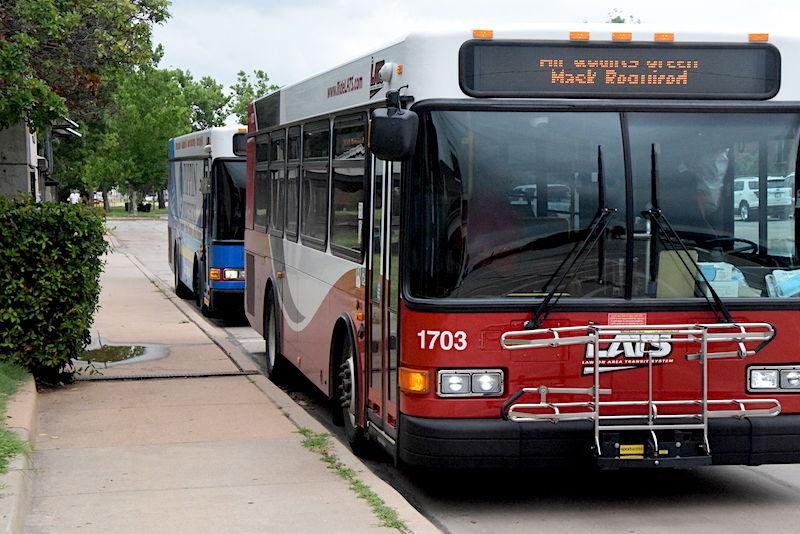
LAWTON – Lawton is looking for companies interested in performing an analysis of zero-emission buses for the city.
The Lawton Metropolitan Planning Organization Transportation Policy Board, which is the city’s final authority for transportation planning, voted Oct. 5 to issue a request for qualifications for a zero-emission bus analysis and rollout plan. An RFQ invites companies to submit their qualifications for conducting a design or study project.
The board will choose a company to conduct the study based on the firm’s qualifications rather than on the lowest price.
Lawton’s current fleet of buses is aging and will eventually need to be replaced, said Deputy City Manager Richard Rogalski. He added that the federal government may be willing to help cover the cost of buying zero-emissions buses.
“There is a lot of anticipation that there’s going to be funding for zero-emission buses,” he said. “That’s not necessarily electric, and there’s other versions, but that’s probably the most popular right now – the electric.”
Rogalski said the city has earmarked $100,000 for the study, but he thought the final cost would probably be lower.
The company selected to conduct the study would need to complete its work by Aug. 1, 2022.
The federal government, which helps pay for Lawton’s mass transit system, wants the city to move toward a zero-emissions system within 15 to 20 years, Kaley Patterson Dorsey, the city’s communications and marketing director, said in an email.
Bus manufacturers are making several types of zero-emission buses, which use fuel more efficiently than diesel-powered buses, according to the U.S. Department of Transportation. Battery electric vehicle buses use a battery pack and an electric motor instead of a fuel tank and an engine.
Hybrid electric vehicle buses rely on an electric motor and an internal combustion engine and use both electricity and gasoline. Fuel cell electric vehicle buses contain a fuel cell system powered by hydrogen, which generates electricity to operate the buses.