

OKLAHOMA CITY — It was sparked just a few decades after the birth of Indian Territory — that area in the southern and eastern part of the state that joined forces with Oklahoma Territory — a spot which covered that big stretch of land north and west.
Together, both became the 46th state, Oklahoma.
Filled with vibrant, beautiful land, and a diverse and unique population, the country’s newest state offered large urban centers — think Tulsa and Oklahoma City – and smaller towns such as Boley, Narcissa or Afton.
Those communities gave the state its unique population and its vibrant personality — but you had to get there to experience either. Filled with hills, woods, streams and plains, Oklahoma’s landscape was a challenge.
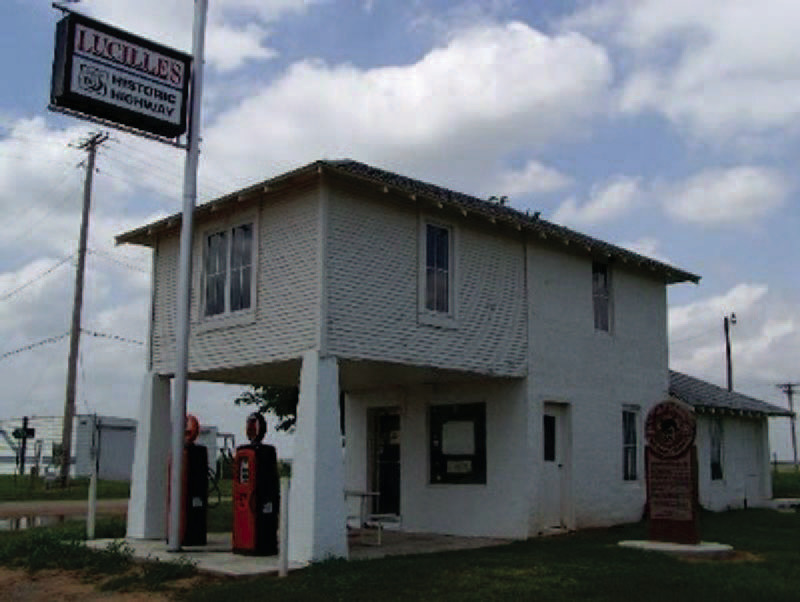
In 1926 — 19 years after statehood — the first nationally known route, Route 66, came to life, tying together the small and large communities across the state.
“As Route 66 left Joplin, MO, it was only a short distance westbound thru extreme southeast Kansas to the Oklahoma border. It quickly entered Commerce, and headed southwest through Miami, Afton, Chelsea, Claremore and Tulsa. The road continued west through Sapulpa, Davenport, Chandler and Arcadia to Oklahoma City,” the website The Mother Road says. “From there, it was a straight shot west through Yukon, El Reno, Hydro, Clinton and Elk City.”
The longest drivable stretch of Route 66 crosses Oklahoma, historians said, making its way past towns, roadside diners and quirky attractions.
The route — which still exists today and continues to be celebrated — was popular and well — for a brief time.
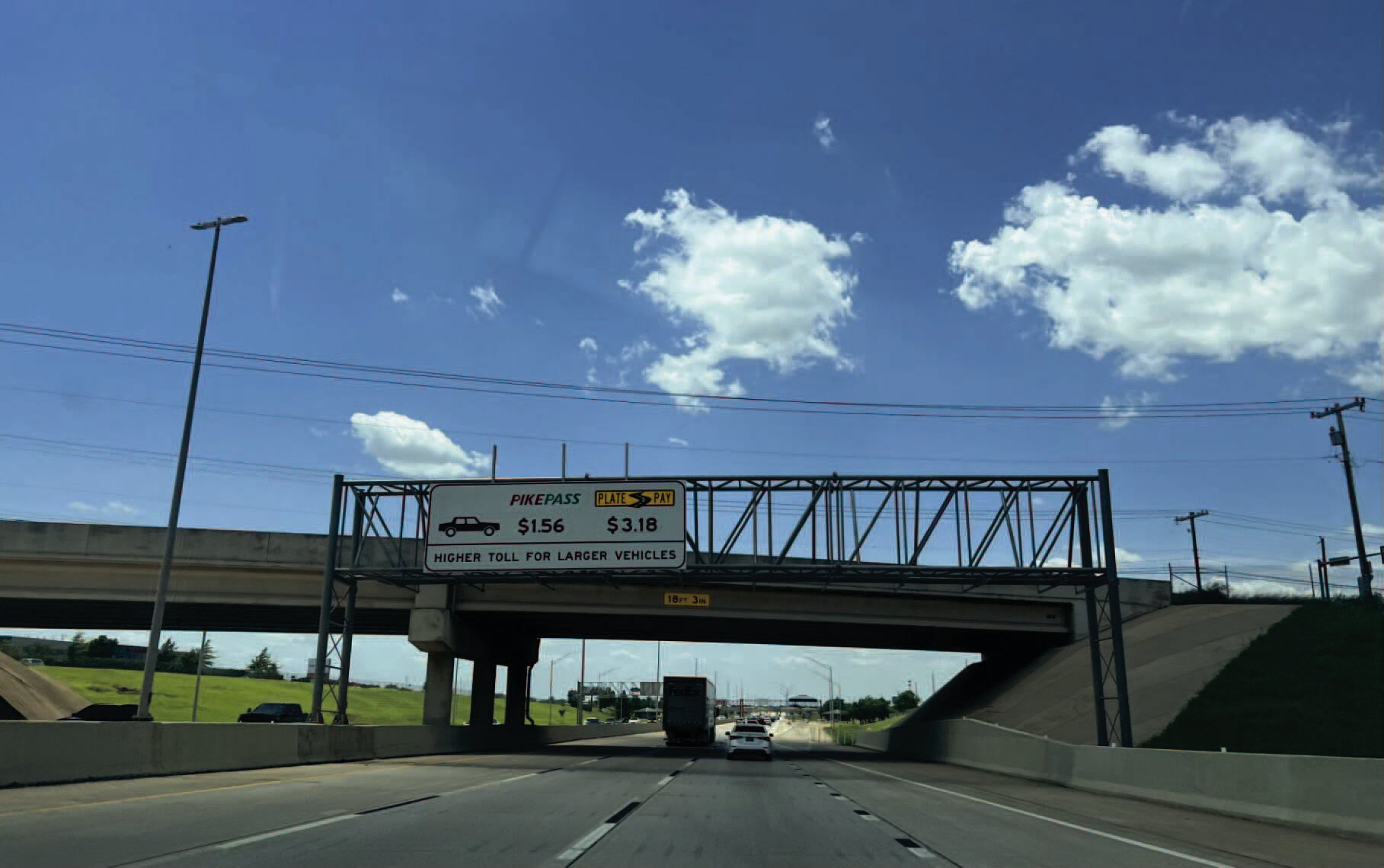
By the time Oklahoma Governor Roy J. Turner settled in office in 1947, the shine of Route 66 had faded. Turner worked hard to bypass Route 66 by creating the Oklahoma Turnpike Authority and launching its first project — a high-speed, well-paved thoroughfare from Tulsa to Oklahoma City.
Historian Bob Burke said Turner moved quickly to embrace a turnpike.
“Turner was already discussing plans for a turnpike … from Oklahoma City to Tulsa.” Before the turnpike, “the only way to do it was Route 66,” Burke said. “You had to go through 40 towns. Now those are towns. But in 1947,” that was another story. “There’s a picture of Roy Turner discussing (the turnpike) with some engineers from New York.”
At first, the idea seemed solid. State-of-the-art construction of a high-speed thoroughfare would enable quick access between Oklahoma’s two largest cities. The road would take a while to build, require lots of money and employee hundreds and while the idea may — at first glance — may be positive, many of the state’s smaller towns came out against the proposal because they were bypassed in the construction. Burke said the state would use more than $31 million in bonds to build the turnpike.
Echoing Burke, historian Courtney Vaughn said Turner’s most recognizable project was the 1947 state legislative bill creating the Turner Turnpike, a major toll road from Oklahoma City to Tulsa.
“Turner spent much time in Washington to secure Public Roads Administration funds for highway construction. Due to the arduous process of obtaining federal moneys, statewide resistance from rural residents, other motorists, and ‘bypassed’ towns such as Bristow and Stroud, the 1949 legislature barely reinstated the bill,” Vaughn wrote.
In fact, the turnpike’s construction didn’t begin until Turner’s last year in office. And even though the project would be completed, it was one of the reasons Turner’s political career also faded.
Objections to the Turner Turnpike by agrarian groups, such as the National Grange and citizens who feared that school consolidation would eliminate their small districts, grew.
“I mean, you’ve got Chandler and Stroud, and you’ve got towns that Route 66 goes through, and all at once, those (towns), they’re losing 75% of their traffic, certainly of people going from Oklahoma City to Tulsa,” Burke said.
The changes and the turnpike may have cost Turner his plans for a U.S. Senate seat in 1954.
Still, in the end, the turnpike would get built. Other turnpike projects — following the same method — would follow. But the frustration with that first project and its impact on rural Oklahoma would grow and continue for decades.
Turnpikes leverage location to offer food, fuel for motorists
Around the same time then-Governor Turner doubled down on his efforts to create a turnpike system, he worked to make sure those who would work and drive on the state’s new transportation system would want for nothing.
That included gas, water and food. The goal, Burke said, was to keep people on the turnpike and, at the same time, generate revenue.
“He wanted to make sure the motorists had everything they needed,” he said.
And it was also a way to recover some of the money the state had spent on construction, Burke said.
“In 1952, before it opened, they did plan to have restaurants, because there’s an architect’s drawing of the large restaurant to be built near Stroud,” he said. “That restaurant would accommodate 175 diners. Phillips Petroleum Company was building the restaurant and service station. The restaurant was operated by Howard Johnson, who operated a chain of restaurants on the East Coast. Then, four smaller service stations with snack bars that would be constructed on the turnpike.”
And while people like Turner and the supporters of his turnpike plan embraced the idea, there was also a huge backlash from the towns that were being bypassed.
“Remember, Route 66 was the major path and since the advent of Route 66, you had traffic in small towns,” Burke said. “You’ve got Sapulpa, you’ve got Bristow coming on down. You’ve got Chandler and Stroud, and you’ve got towns that Route 66 goes through. And all at once, those communities were losing 75% of their traffic because of people going from Oklahoma City to Tulsa via the turnpike.”
The business in the small towns was tremendously affected, he said.
“So, there was an outcry, and not only the businesses like the service stations, but they had an added incentive to object to operations of the Turnpike Authority,” he said. “All at once, Phillips 66 was putting five facilities along the turnpike. They put five service stations along the route, so people never had to get off the turnpike.”
Records show that gas stations and restaurants have also generated millions in revenue for the state.
Consider the past few years. “Since 2020, restaurants and gas stations on Oklahoma turnpikes have generated roughly $180 million in gross sales,” a state revenue report shows. “The Oklahoma Turnpike Authority does not operate these businesses directly, but instead collects a fraction of these earnings, totaling about $13 million in concessionaire rent during this period.”
That report shows Turner Turnpike generated sales figures as follows: restaurant sales: $90 million to $95 million from 2020 to 2025; and $85 to $95 million in service station fuel and store sales during the same time.
Those sales generated $13 million in OTA concession rent collected – from one turnpike.
At the same time, total toll revenues for the turnpike system during this same period exceeded $1.5 billion. Over the past decades, as revenue sparked by the turnpikes increased, the goal to expand the market has increased.
As the revenues mounted, turnpike officials said they wanted “to do more turnpikes,” he said.
“In 1964, the H. E. Bailey opened, the Indian Nations opened in1966, the Muscogee Turnpike in 1969 and the Cimarron in 1975,” he said.
While the state didn’t add any turnpikes for 16 years, expansion renewed: the Chickasaw Turnpike, that two-lane road between Ada and Sulphur, and then we ended up with the Kilpatrick Turnpike in 2001.
“I mean, all at once we’ve got 12 or 13,” Burke said. “The historical society has an article that says out-of-state motorists paid approximately 40% of the total collected on Oklahoma’s Turnpike.”
Since then, the OTA budget has continued to increase. In November 2025, the agency adopted a $330 million budget for the calendar year 2026. That figure includes $165,020,177 for capital expenditures and $165,056,062 for operations and maintenance of the system. Currently, Oklahoma has a dozen toll roads – roughly 635 miles – with 900 bridges and 104 interchanges.
And while the OTA is fully funded by toll revenues paid by those who travel on the turnpikes, about 50% of those tolls, Executive Director Joe Echelle said, are generated from out-of-state travelers.
Still, for those small towns bypassed by the turnpike, the negative impact remains significant.
Originally pitched as a temporary way to fund roads until bonds were paid off, Oklahoma’s turnpike collections remain in place.
Records show the OTA has accumulated billions in debt and uses a “cross-pledging” system, using heavily trafficked routes (like the Turner Turnpike) to subsidize less profitable, rural tollways.
In addition, small towns frequently complain that although they generate zero profit from state turnpike tolls, local municipalities are often saddled with the burden of providing free emergency services and fire responses for collisions along heavily traveled toll roads.
In addition, the multi-billion- dollar expansion push, known as ACCESS Oklahoma, has spurred numerous grassroots lawsuits from rural and suburban property owners who fear the destruction of homes, farmland and local waterways.
State’s turnpikes bring both positives and negatives Oklahoma built its first turnpike more than 70 years ago with a main goal: move traffic quickly between Tulsa and Oklahoma City. On that goal, the state succeeded.
The long stretch of highway, two lanes on each side, was well-paved and well-lit. It offered a straight shot between the state’s two largest communities. The roads were easy to navigate and, at the same time, the speed limit mirrored that of state and national highways. In fact, turnpike motorists had easy access to food and gas; with facilities along the turnpike, no exit was needed.
For supporters, Burke said, the turnpike was a hit.
“It had a big selling point,” Burke said. It was, ‘Hey! Let’s get people traveling through the state. Give us a four-lane modern highway so that business can move between Oklahoma City and Tulsa. The state can be run much more smoothly.’” But there was another side: even though turnpikes quickly became popular, other issues followed. Issues that, in fact, still haunt the state today.
While traffic — both in-state travelers and those from other places — could move quickly to Oklahoma City or Tulsa, those same travelers bypassed the small towns along the way.
Traffic and business to places like Stroud, Bristow or Chandler quickly slowed to a halt, Burke said.
“The construction of the turnpike alienated the businesses in these smaller towns along the way,” he said. “Can you imagine if you owned the service station in the 1940s in Bristow, and you had a lot of people coming through there on Route 66? Then, just a few years later, here comes the Turner Turnpike, and everybody’s out on the turnpike. And while they may be buying — they’re not going to get off at the exit and come into town in Bristow to buy their gas; they’re just going to pull off at the convenient Phillips 66.”
Traffic to these towns began to fade. That change brought with it a decrease in tax revenue. Opposition to the turnpikes began to grow in the rural areas. In fact, some political scientists say that turnpike opposition grew so much against then-Gov. Roy Turner — the founder of the turnpike in Oklahoma — that it killed Turner’s future political aspirations after his term as governor ended.
In addition, many residents believe that Turner and others originally sold the turnpike idea as one that said the turnpike would drop its fees after its construction was repaid — but that pledge never happened.
One critic of the OTA and to the state’s turnpikes, Pike Off OTA, published an account echoing the stories that the original plan was to eventually make the turnpike three.
“In 1954, Oklahoma citizens voted to build turnpikes that would be free to drive once their bonds were paid off,” the group said. “In 1955, the legislators and lobbyists (without citizen buy-in) changed the language to allow cross-pledging.”
Oklahomans, the group said, voted in 1954 to approve State Question 359 and SQ 360. “They never expected their grandchildren, great-grandchildren and great-great-grandchildren would still be paying tolls on those same turnpikes decades later. The state questions they voted on included a provision that the turnpikes would become part of the state highway system after the turnpike bonds were paid,” the organization said.
That debate continues today. And that debate, Burke said, will continue. “The value of turnpikes in Oklahoma — in my opinion as a historian — is double-sided. If you want to whiz through Oklahoma, as they say, 40% of people from other states do. If you’re a truck driver, if you want to whiz through the state and get through from Oklahoma City and Tulsa it’s border to border now.”
That turnpike-focused traffic, he said, bypasses the smaller towns and communities — the areas that help make Oklahoma.
“You can stop the H.E. Bailey at the Texas-Oklahoma border. You can end in the Will Rogers when you pass Miami at the Missouri line. You can go across this state two different ways, from Texas to Missouri and from Arkansas to Texas, without, if you don’t want to, getting off the turnpike,” he said. “If your desire is to whiz through the state at the fastest speeds possible, then it’s a good thing, but I believe overall turnpikes have bypassed and adversely affected many, many, many small towns.”
That bypass, he said, changed more than just access from one place to another. The turnpikes, Burke said, had a negative financial impact on many communities, too.
“There have been dozens and dozens of communities who have been bypassed,” he said. “Before the turnpikes in small communities, many travelers got off the highways and, rather than stop at restaurants, many — including my parents — would stop at some grocery store, get some bologna and cheese, and find some place along the road to eat.”
Once the turnpikes came online, he said, thousands of businesses were now adversely affected by people whizzing up the turnpike.
“So, for those towns, and for the owners of businesses in those towns, and for the general economy of those towns, it was a bad deal. And, more than 70 years later, we’re still paying for the Turner Turnpike,” he said.
M. Scott Carter is an award-winning political and investigative reporter with more than 40 years’ experience covering federal and state government and politics in Oklahoma. He can be reached at scott. carter@swoknews.com.