

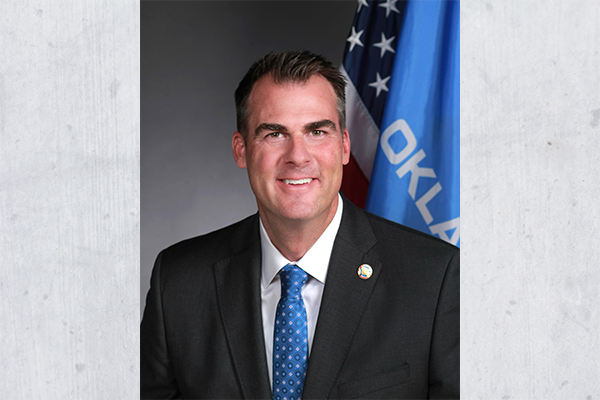
Oklahoma’s governor is at odds again with five of the state’s most powerful Native American tribes, but this time it’s over a decision not to renew hunting and fishing licensing compacts that end Dec. 31.
Gov. Kevin Stitt has fought with tribal leaders over his desire to renegotiate tribal gaming compacts that he claimed were expiring. Federal and state courts ruled against Stitt in lawsuits over the gambling question.
Then came the controversial U.S. Supreme Court decision that found Oklahoma lacks jurisdiction over serious crimes committed on tribal reservations by or against tribal citizens. Again, Stitt lost in court but is still trying to appeal the case.
Now, the governor is refusing to renew the hunting and fishing compacts that went into effect in 2016 under then-Gov. Mary Fallin. Under the compacts, the Cherokee and Choctaw tribes paid $2 for each license and were then distributed among tribal citizens at little or no cost to them. The tribes have paid $38 million to the state through those compacts. Stitt previously approved the compact renewals in 2019 and 2020 citing the federal wildlife management funds the state received because of the compacts.
“Under previous administrations, compacts regarding hunting and fishing licenses were a routine matter,” said Choctaw Nation Chief Gary Batton. “Unfortunately, Governor Stitt has once again decided to let his personal concerns outweigh what is best for the people he was elected to represent, putting conflict above cooperation.”
The landmark compacts were the first state-tribal agreements of their kind in the country and captured millions of federal dollars for wildlife management. Over their lifetime, the Cherokee compact generated more than $32 million and the Choctaw compact accounted for $6 million. The Oklahoma Department of Wildlife Conservation dedicates that funding for wildlife management planning and operations, law enforcement and conservation efforts, benefiting Natives and non-natives alike.
Although tribes have guaranteed hunting and fishing rights on their reservations under their treaties with the United States, the compacts allowed for a coordinated, intergovernmental system that provides hunting and fishing opportunities for tribal citizens while generating revenue and federal funding for wildlife management programs across the state.
A Stitt spokesman said Stitt believes all Oklahomans should be treated equally and pay the same price for hunting and fishing licenses.
Chickasaw Nation Governor Bill Anoatubby said an important part of wildlife conservation is to protect and preserve the environment for future generations.
"Chickasaws have long had a close relationship with the land and a strong commitment to responsible stewardship of our natural resources,” he said. “Therefore, the Chickasaw Nation is joining the Cherokee, Choctaw, Creek and Seminole nations in a collaborative effort to protect the hunting and fishing rights of our citizens while also preserving Oklahoma's abundant wildlife for the benefit of our children and grandchildren."
Other tribal leaders expressed their disappointment in Stitt’s decision.
“This is tremendously disappointing, not just for Cherokee citizens who are losing a program that Governor Stitt himself knew was a win-win, but for every Oklahoman who has benefited from these agreements and the future generations that would have benefited from federal funding to support wildlife management and conservation,” said Cherokee Nation Principal Chief Chuck Hoskin, Jr. “Unfortunately, this is consistent with what we’ve seen from the governor since the Supreme Court’s McGirt decision. Whenever there is an opportunity to cooperate with tribes – whether on keeping criminals off the streets or on hunting and fishing rights – the governor has instead sought to undermine collaboration and claim McGirt created chaos. I promise the citizens of the Cherokee Nation that I will continue to aggressively defend our treaty rights and sovereignty against these attacks.”
Muscogee Nation Principal Chief David Hill joined with the other leaders.
“We believe in the treaty rights of tribal nations. The state’s decision to end the hunting and fishing compacts with the Cherokee and Choctaw nations is disappointing especially in that it only hurts the state of Oklahoma, but the true intent is to demean tribal sovereignty,” he said.
Leaders for the Comanche and Apache tribes could not be reached for comment.
Stitt, state tribes in dispute over hunting, fishing compacts
Body