

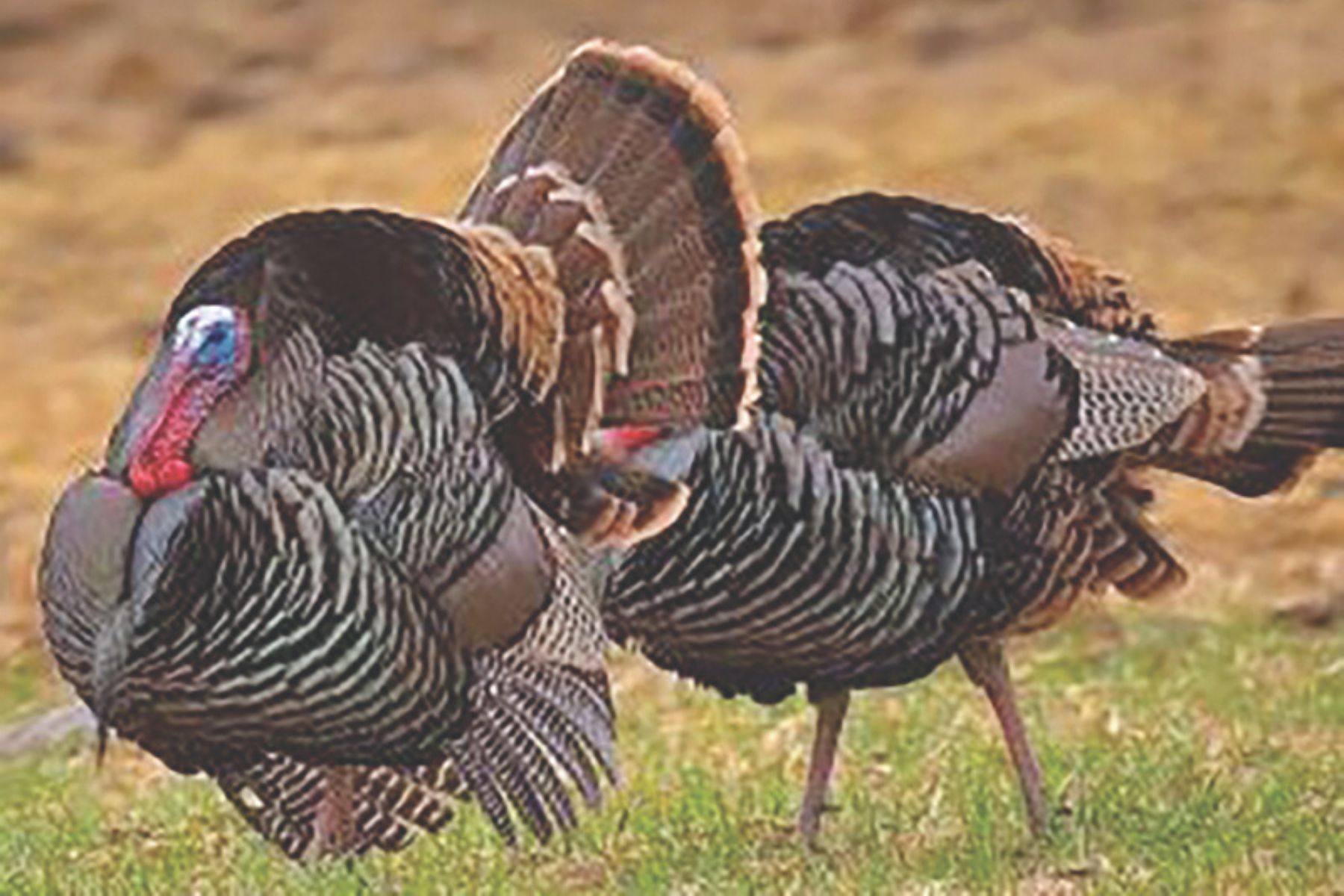
OKLAHOMA CITY – The Oklahoma Wildlife Conservation Commission voted recently to reduce or alter wild turkey hunting bag limits in large areas of western Oklahoma because of declining numbers.
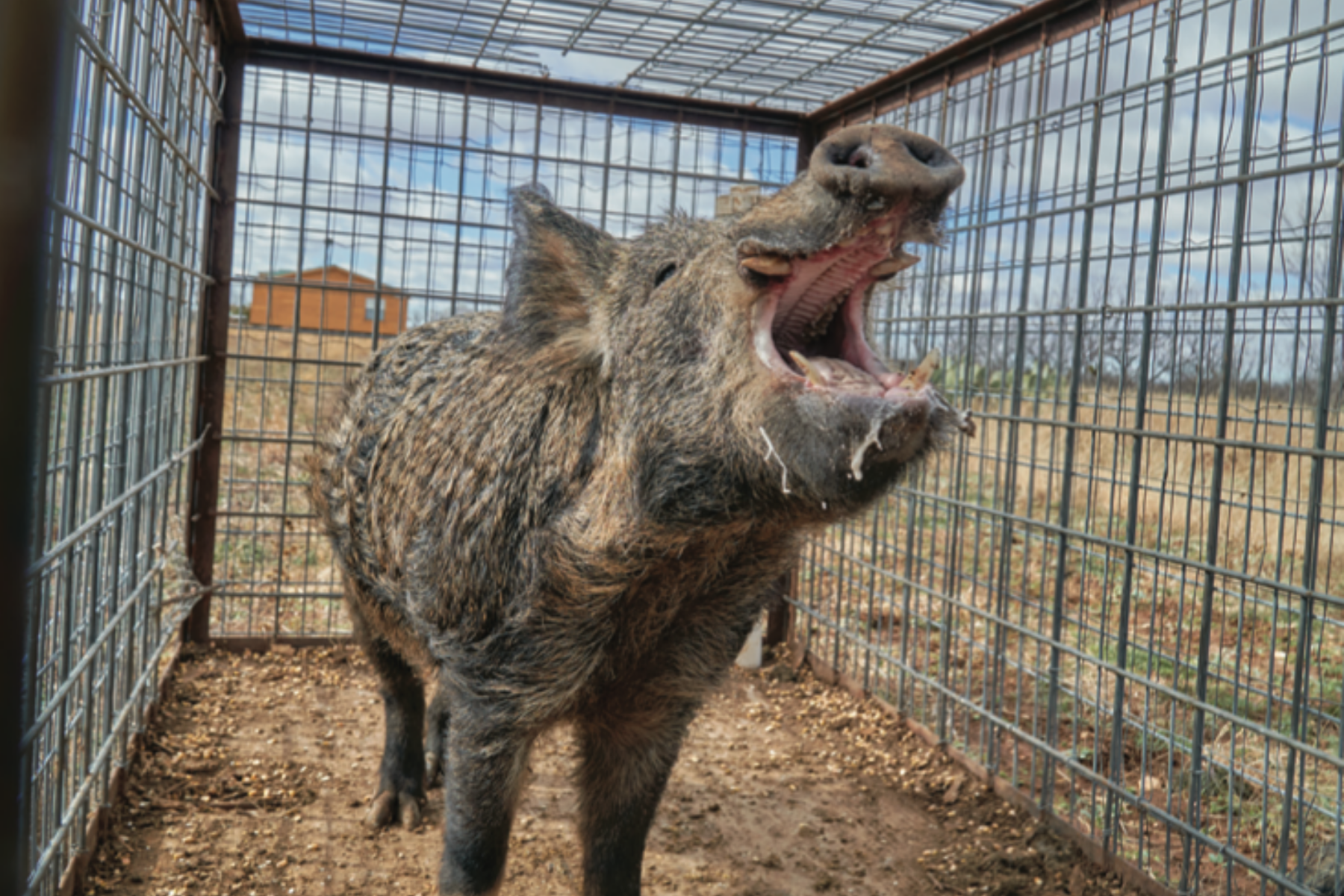
The commissioners also heard a presentation about the exponential spread of wild hogs across Oklahoma and efforts to control feral swine along the Red River.
Starting this fall, turkey gun hunters will be allowed to harvest only one adult male “tom” in the 14 counties that previously permitted either-sex harvest. Those counties include Comanche, Tillman and Jackson in Southwest Oklahoma. Archery hunters will still be allowed one turkey of either sex statewide in the fall.
Next spring, all counties outside the Southeast Region will have a one-tom limit. The spring turkey season limit remains unchanged at three toms. None of the changes being made will affect existing regulations in the Southeast Region for turkey hunting, where the season limit is one tom turkey.
Chief of Wildlife Bill Dinkines told the commissioners declining turkey numbers during the past two years, especially in southwestern Oklahoma, prompted the bag limit changes.
FERAL HOGS SPREAD THROUGHOUT STATE
Scott Alls, state Director of Wildlife Services for the U.S. Department of Agriculture’s Animal and Plant Health Inspection Service and the Oklahoma Department of Agriculture, Food and Forestry, recently said feral swine have migrated statewide.
“We’re catching 200 to 300 a year in the metro, in the suburbs of Oklahoma City,” he said, and wild hogs have moved into the Panhandle, too.
In 1982 there were “a few pigs” in southeastern Oklahoma, but within 20 years, their “presence” was statewide, he said.
Feral swine reproduce at a high rate. Piglets become sexually mature at about six months of age and have their first litter at nine months, Alls said. When food is plentiful, a sow can produce two litters a year, with 12 to 15 piglets per litter.
Using those rates, a sow with a couple of pigs can generate 43 of the animals within five years, he said. By Year 10, though, the herd theoretically has grown from three feral hogs to 605. By Year 20, their reproduction is exponential; the first three pigs have multiplied in number to 122,000.
Oklahoma is approaching 40 years of increasing numbers of wild hogs.
To keep a herd of wild hogs (known as a “sounder”) at a manageable number – “just to flatline ’em” – requires killing 70% of the animals, Alls said. Hunters invariably tend to shoot the biggest boar in the sounder “when really they should shoot the young sows, because those have the longest lifespan and produce the most pigs.”
“Shooting feral hogs is different from controlling feral hogs,” said Jeff Pennington, Central Region supervisor with the Oklahoma Department of Wildlife Conservation. Wild pigs in Oklahoma have no natural predators. The only natural enemies of feral swine are humans and weather, particularly drought, he said.
WILD HOGS ARE A MENACE
Wild hogs are incredibly destructive, uprooting gardens and fields while foraging for food, polluting water sources – “there’s a whole gamut of things they affect,” Alls said.
Southwestern Oklahoma has a lot of irrigated crops, he noted. Consequently, “We have a lot of damage to corn and cotton from pigs.”
Feral swine wallows also are prime mosquito habitats that contribute to the prevalence of various mosquito-borne diseases, the U.S. Department of Agriculture reports. Wallows can also be a place of transmission for bacteria and parasites from feral swine to native wildlife that come to drink, the USDA reports.
Feral swine can be infected with brucellosis and leptospirosis, which can be passed to humans. Pseudorabies is found in about one-third of the feral swine population; the disease can spread to dogs, cattle, goats and sheep.
Wild pigs also put stress on native species. The hogs compete with native wildlife for food that supports deer, raccoons, black bears and opossums. The hogs not only destroy habitat, they also prey on the eggs and young of native ground-nesting birds and reptiles, including threatened or endangered species, the USDA reports. Game birds such as wild turkeys, grouse and quail also are adversely affected.
Feral hogs actively hunt small mammals, frogs, lizards and snakes, according to the USDA, and have even been documented killing and eating deer fawns.
“This year, 85% of landowner requests we’ve received have been for assistance in dealing with pigs,” Alls said.
The estimated population of wild hogs in Oklahoma ranges from 600,000 to more than a million.
Alls said that recently USDA hunters aboard a helicopter flew over several sections of land in Cotton County along Cache Creek and bagged 524 feral hogs in five hours. Since mid-February, approximately 2,200 wild hogs have been harvested in Oklahoma, he said.
‘SWINE-FREE’ ZONES GOAL OF OCC, USDA
Creation of a “feral swine free zone” along the Red River is a goal of a three-year pilot project administered by the Oklahoma Conservation Commission (OCC) with a $1.04 million grant from the USDA.
The Feral Swine Eradication and Control Pilot Program will focus on two areas of the state: Cotton, Tillman, Jackson and Harmon counties in the Western Red River area, and Kay County in northern Oklahoma.
The Western Red River watershed is targeted in a multi-state effort of the Oklahoma Conservation Commission and Texas conservation partners in an effort to “significantly reduce the feral swine population where the invasive species has created substantial economic losses,” OCC public information officer Bryan Painter wrote in a news release.
“We’re placing 40 traps in the Red River project, 10 per county,” Alls told the Wildlife Commissioners.
FERAL HOG HUNTING BANNED IN 4 WMAS
In a related matter, the OCC commissioners voted to immediately prohibit all recreational hunting of feral hogs on four wildlife management areas: the 7,120- acre Hackberry Flat WMA southeast of Frederick in Tillman County; the 10,580-acre Waurika WMA in Cotton and Stephens counties; Sandy Sanders WMA, 29,766 acres in Greer and Beckham counties; and Kaw WMA, 16,254 acres in Kay County.
The prohibition supports the Feral Swine Eradication and Control Pilot Program of the OCC and the USDA in those areas. Officials said eradication efforts in those areas will be more effective without wild pig hunting. “It’ll shut down hog hunting so there’ll be no incentive to illegally transport hogs and dump them out in those areas for sport hunting,” Alls said.