

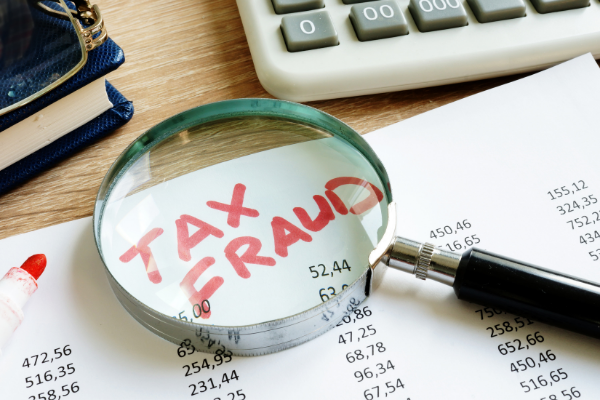
OKLAHOMA CITY – Legislation to ensure that a state sales tax exemption reserved exclusively for totally disabled veterans is enjoyed solely by those men and women has been signed into law.
The U.S. Department of Veterans Affairs says Oklahoma has 16,000 military veterans who are fully service-disabled – but the Oklahoma Tax Commission has approximately 32,000 military tax-exempt certificates on file.
Senate Bill 415 authorizes the Tax Commission to disclose taxpayer information for 100% service-disabled veterans who qualify for the sales tax exemption to the Oklahoma Department of Veterans Affairs. ODVA will then verify eligibility for the exemption to the Tax Commission.
SB 415 went into effect immediately after the governor signed it April 28.
“It’s about time,” said J.P. Richard of Lawton, a Vietnam veteran who is chairman of the Comanche County Excise Board. The tax break “has been abused for far too long.”
Totally disabled veterans who were honorably discharged from the military receive a sales tax exemption that saved them an estimated $45.54 million last year, according to the Tax Commission.
Approximately 19,000 military veterans live in Comanche County – home of the Fort Sill Army post – records indicate. Most of those veterans “have some degree of disability,” said Richard, former owner of Cache Road Liquors in Lawton. He himself has significant hearing loss from serving with the 1st Infantry Division (“the Big Red 1”) during the Vietnam War.
Comanche County has almost 3,800 totally disabled military veterans, Richard said. That ranks Comanche County second among the state’s 77 counties, “just a little behind Oklahoma County,” which had 4,121 disabled veterans last year, according to the Oklahoma County Assessor’s Office.
State Sen. Frank Simpson, R-Springer, principal author of SB 415, said SB 415 was “desperately needed to stop the improper use of the tax exclusion.
“It’s hard to believe, but it appears some 16,000 people in our state are committing fraud by claiming this sales tax exemption,” said Simpson, who chairs the Senate Veterans and Military Affairs Committee. “As a veteran myself, it horrifies me that anyone would lie and dishonor these brave military men and women, let alone the tremendous sacrifices they made for our country that led to their disability.”
The new law “will protect this military benefit as well as the tax revenue currently being stolen by these frauds,” Simpson said. “The Oklahoma Legislature always stands strong in defending our military. I want to thank them and Governor Stitt for protecting this benefit.”
Rep. Tommy Hardin, a Madill Republican and a Marine veteran, was the House sponsor of the bill.
“Senate Bill 415 will help reduce tax fraud that is all too prevalent right now and help protect our state’s brave men and women who served our country,” Hardin said.
To remain eligible for the sales tax exemption, qualifying veterans must register with the Oklahoma Veterans Registry by July 1, 2023, at https://registry.odva.ok.gov/registration.
In a related matter, Richard is still trying to persuade the Legislature to appropriate some money to compensate counties for the ad valorem tax exemption accorded to military veterans who have a 100% permanent disability “sustained through military action or accident or resulting from disease contracted while in … active service.”
Totally disabled veterans, and their surviving spouses, are entitled to claim an exemption for “the full amount of the fair cash value” of their homestead.
The exemption was authorized by SQ 715, which was endorsed by 84% of the 1.4 million voters who voted on the proposal in November 2004. It went into effect in 2006.
While the legislation is intended to reward disabled veterans for their military service, it has had a marked impact on the Comanche County budget. The tax exclusion has “pretty much” eaten up all of the increase in ad valorem taxes the county realized in the current Fiscal Year 2021, Richard said.
“Our property-tax gains – which totaled $6,430,359 in Fiscal Year 2020 – were offset by the value of the exemptions,” he said. The lowest exemption claimed was $22 and the highest amounted to $8,125, Richard said.
The Legislature compensates counties and school districts for manufacturing and wind-farm property tax exemptions, “but doesn’t do the same for the disabled veterans’ exemption,” he noted. “So it’s an unfunded mandate.”
Four pieces of legislation to address the disabled veterans property tax exemption were introduced over the last three years, but none made it out of the house of origin. The most recent was SB 243, which died in the Senate Finance Committee this year.