

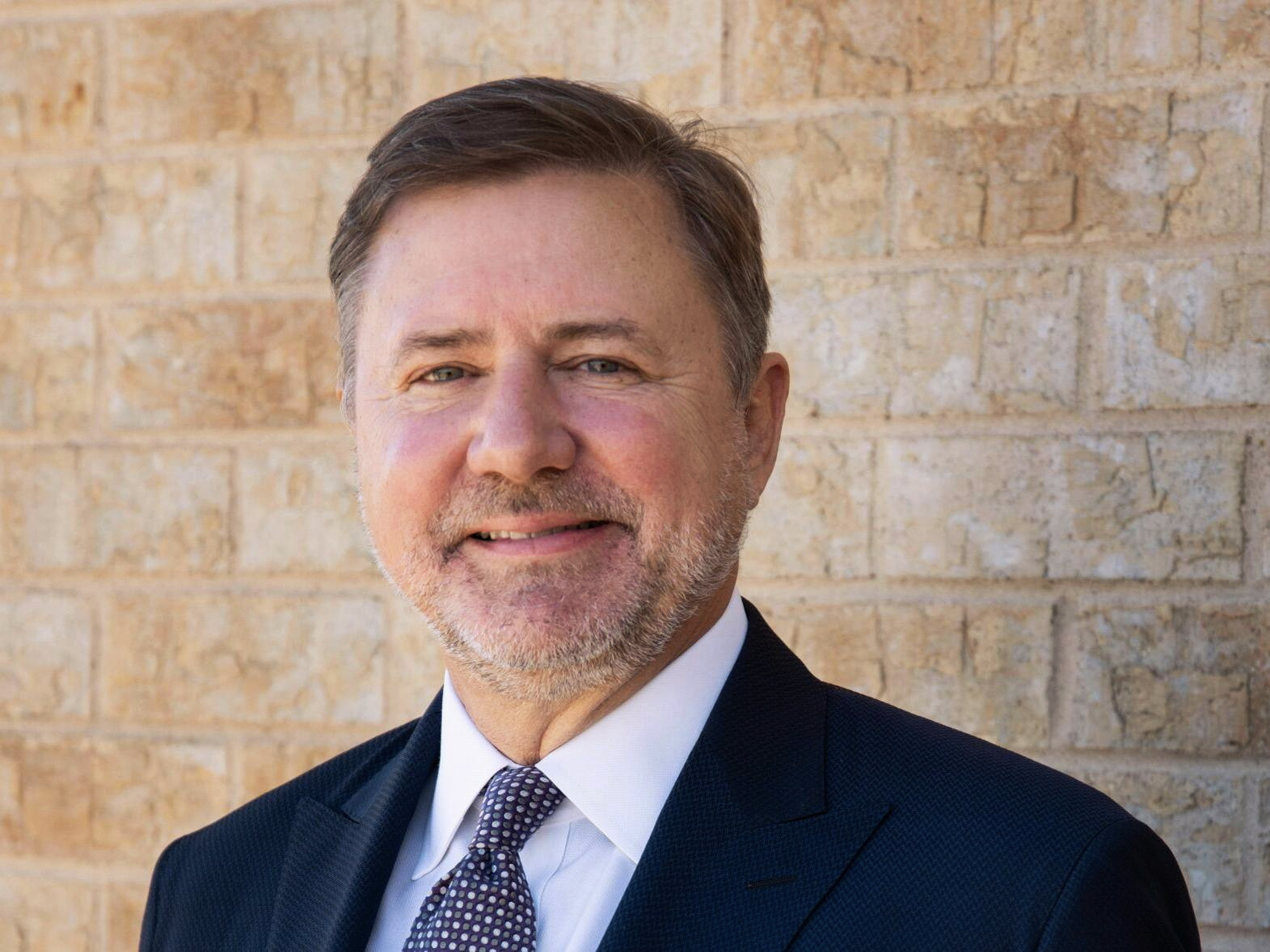
State Attorney General Gentner Drummond
OKLAHOMA CITY — State Attorney General Gentner Drummond has withdrawn an opinion issued by his predecessor which opened the door for religious schools to receive public funding.
In one of his final acts in public office, former Attorney General John O’Connor issued an opinion on Dec. 1, 2022, that “misuses the concept of religious liberty by employing it as a means to justify state-funded religion,” Drummond wrote in a Feb. 23 letter to Rebecca L. Wilkinson, executive director of the Statewide Virtual Charter School Board.
In his letter, Drummond noted that charter schools are “public schools established by contract,” which enables them to receive public funding, a position that is consistent with current state law and the Oklahoma Constitution.
O’Connor wrote that pursuant to conclusions of the U.S. Supreme Court in three separate cases, “the non-sectarian and non-religious requirements … in the Oklahoma Charter Schools Act” are “likely” unconstitutional.
Drummond pointed out that the three cases O’Connor cited involved private schools, not charter schools. Consequently, those cases “have little precedential value as it relates to charter schools.”
O’Connor was appointed attorney general by Gov. Kevin Stitt and filed for election to a full four-year term last year, but Drummond defeated him in the June 28 Republican primary.
Drummond said his office “recognizes that the law is currently unsettled as to whether charter schools are state actors,” and he hopes the U.S. Supreme Court “will definitively rule” on the issue during its next term.
In the absence of binding precedent that definitively spells out whether charter schools are state actors, Drummond said he was not comfortable advising SVCSB members to violate the Oklahoma Constitution’s clear directive.
The Oklahoma Constitution mandates, “Provisions shall be made for the establishment and maintenance of a system of public schools, which shall be open to all children of the state and free from sectarian control…”
And the state Legislature has decreed that a charter schools “shall be nonsectarian in its programs, admission policies, employment practices, and all other operations,” Drummond noted.
The Statewide Virtual Charter School Board is considering an application for St. Isidore of Seville Catholic Virtual School. The Catholic Church in Oklahoma wants the school to serve students in towns that don’t have a Catholic school and increase online courses for students in existing Catholic schools.
The executive director of the Catholic Conference of Oklahoma said the school intends to be “a fully Catholic school – Catholic in every way: Catholic in teaching, Catholic in employment …”
“[I]t would clearly violate the First Amendment and Oklahoma Constitution for a public school … to be ‘Catholic in every way’,” Drummond wrote. He cautioned that approval of an applicant that is overtly religious in its teachings and operations would set a precarious precedent.
Religion in school arose in state House 28 years ago
While many Oklahomans “undoubtedly support charter schools sponsored by various Christian faiths,” the precedent that would be created by approval of St. Isidore Catholic Virtual School would compel approval of “similar applications by all faiths,” Drummond wrote.
“I doubt most Oklahomans would want their tax dollars to fund a religious school whose tenets are diametrically opposed to their own faith,” he wrote. “Unfortunately, the approval of a charter school by one faith will compel the approval of charter schools by all faiths, even those most Oklahomans would consider reprehensible and unworthy of public funding.”
In 1995, former state Rep. Bill Graves, R-Oklahoma City, filed a bill that would have allowed the Bible to be used as an educational tool in Oklahoma schools. He said his intent was to “teach children morality, not about a particular religion,” or to study the Bible in the classroom as history or literature.
During floor debate on the proposal in the House chamber, a state representative asked Graves whether it would be permissible for other religious texts, such as the Islamic Quran, to also be taught in schools.
Graves replied, “That wouldn’t be my first choice.”
Drummond was “well within his powers to withdraw a previous legal opinion,” and his decision “demonstrates just how important full passage of the Oklahoma Parental Choice Tax Credit Act will be for Oklahoma parents and students,” House Speaker Charles McCall, R-Atoka, said afterward.
That proposed law would “provide an avenue for parents to use their own hard-earned money to spend on an education … that is of their choosing, and it provides for less government intrusion into local districts and the personal lives and finances of Oklahomans.”
McCall’s House Bill 1935, the Parental Choice Tax Credit Act, would allow a $5,000 annual income-tax credit for qualified expenses made by parents of eligible students who attend private schools, and a $2,500 credit for students educated by other means provided for in state statutes.
The bill passed the House, 75-25, on Feb. 22 and was transmitted to the Senate.
Drummond’s action “shows how critical it is to provide Oklahomans with a well-thought-out, logical approach to school choice that will benefit everyone equally,” McCall said.