

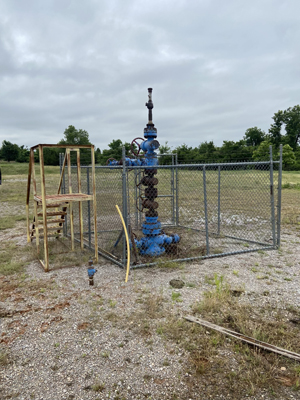
NORMAN — Researchers in the Mewbourne College of Earth and Energy at the University of Oklahoma are poised to become the first in the world to modify retired oil wells into geothermal wells.
OU Associate Professor and Lead Researcher Saeed Salehi and his team of researchers want to use four wells owned by Blue Cedar Energy, a local company, for a concept called “direct use”: using hot water to heat nearby buildings.
In the initial phase, Salehi anticipates the team will spend three years retrofitting the four oil wells. The team’s plan is to inject water underground and pump it back to the surface. Salehi and his team expect the water they pump into the wells to heat up to temperatures around 150 degrees Fahrenheit.
After the wells are modified to produce geothermal energy, researchers will spend the next year measuring the energy production to see if actual output aligns with their estimates and models, and if the wells will create enough energy to heat an elementary and middle school located about a mile away in Tuttle.
The current scope of the project does not include the next step of heating the schools with geothermal energy, but rather ensuring that it is possible. Salehi and his team hope that once their current project is complete, they can apply for new grants and state matching funds to make heating the schools with geothermal energy a possibility.
Oil and gas wells have a limited lifespan of a few decades, after which they become depleted, Salehi noted. Geothermal energy, if managed correctly, doesn’t have that problem. “The beauty is that this is a constant source of energy which is not going to change. It’s probably going to be [there] forever, so long as your well is functioning,” Salehi told Recode by Vox last year.
Almost 18,000 abandoned oil and gas wells are scattered across Oklahoma, state Corporation Commission records indicate, and it would cost an estimated half-billion dollars to plug all of them and remediate the production sites.
On average, more than half (51% in 2015) of a household’s annual energy consumption is for just two energy end uses: space heating and air conditioning, according to the federal Energy Information Administration. These mostly seasonal and energy-intensive uses vary significantly by geographic location, home size and structure, and equipment and fuels used.
Water heating, lighting, and refrigeration are near-universal and year-round home energy uses. In 2015, these three end uses combined accounted for 27% of total annual home energy use.
The remaining share – 21% – of home energy use was for devices such as televisions, cooking appliances, clothes washers, and clothes dryers, as well as a growing list of consumer electronics including computers, tablets, smartphones, video game consoles, and internet streaming devices.
Another potential benefit of the geothermal repurposing project is that it might help the more than 125,000 people who are employed in oil/gas extraction in the U.S. to transition into clean-energy jobs.
In a related matter, the Sooners Geothermal Team from OU designed a system repurposing six abandoned oil and gas wells in Shawnee to provide clean, renewable geothermal energy for more than 730,449 square feet of educational and municipal buildings, including sites within the Absentee Shawnee Tribe and Potawatomi Nation jurisdiction.
By using previously drilled, currently unproductive oil and gas wells, the team showed how a creative design could reduce drilling costs to feasibly power local schools, religious centers, and government buildings using geothermal energy.
The team from the Mewbourne College of Earth and Energy OU team captured first place in last year’s U.S. Department of Energy Geothermal Collegiate Competition and won $10,000.