

From staff reports OKLAHOMA CITY – “A strong healthcare system is the backbone of a healthy economy,” Rep. Daniel Pae (R-Lawton) said last week before the House Public Health Committee during a legislative interim study he requested, along with Rep. Arturo Alonso-Sandoval (D-Oklahoma City), on rural healthcare challenges.
Sean McAvoy, executive director of Primary Care Services for Comanche County Hospital Authority, who also addressed the committee, said there are several reasons why providers may choose not to go to rural areas.
Many rural areas lack facilities that meet healthcare standards, he said, and would require new construction of healthcare facilities. In addition, a smaller workforce is available to recruit from, which, in turn, leads many healthcare providers to recruit costly new hires. McAvoy also said that rural areas with fewer employees mean fewer people with employer-sponsored healthcare, which typically pays better rates to healthcare providers.
Transportation is also a challenge in rural areas, he said, especially for older adults; however, telemedicine is becoming a valuable tool to address certain healthcare concerns. McAvoy mentioned mobile clinics as a good option to expand care in rural areas quickly, although high operational costs are usually a concern.
Melissa Alvillar, the chief nursing officer at Comanche County Memorial Hospital, told the legislative committee that Oklahoma is ranked 49th nationally in healthcare outcomes.
“Hospitals such as ours are willing to grow and willing to add beds to facilitate the care that the rural environment needs, but we need the financial help to support that,” she said. Alvillar noted that with needed support from lawmakers to deliver the care Oklahomans deserve, the state has the ability to rank higher than 49th in healthcare.
She also cited the increase in physical assaults and threats against healthcare providers as reasons it’s difficult to recruit people to join or stay in the healthcare workforce. The cost of staff pay and benefits to retain employees is “through the roof,” further stressing hospitals’ and clinics’ budgets.
The legislative press release noted that in 2023 Oklahoma’s healthcare spending per capita was $9,444, whereas the U.S. healthcare spending per capita was $10,191, according to the Oklahoma Hospital Association.
Rich Rasmussen, OHA president and CEO, told the legislative committee that total expenses were $2 billion higher in 2023 than pre-pandemic. He said this was due to rising labor costs, including contract labor expenses, as well as the rising costs of utilities, drugs and supplies.
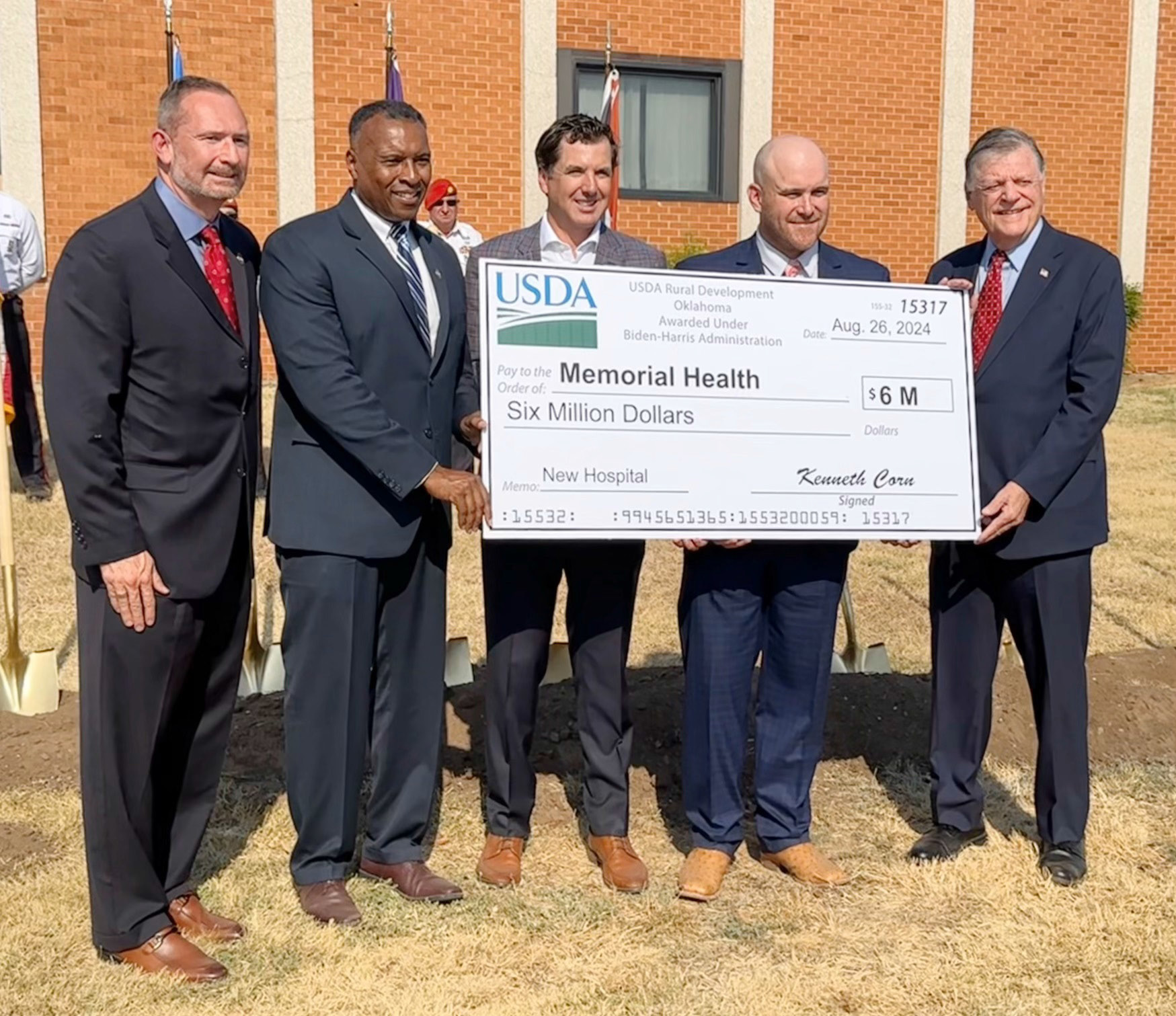
During the presentation, Dr. Mark Woodring, vice chair of the Board of Rural Health Association of Oklahoma, highlighted the recent groundbreaking of a new rural hospital in Tillman County. Since the 2016 closure of Memorial Hospital and Physician Group in Frederick, residents have driven between 30 minutes to an hour to receive hospital-level care. The new hospital is funded in part by the Legislature's appropriation of federal American Rescue Plan Act funds.
According to the most recent data, Woodring said, “Most of Oklahoma is a health professional shortage area.” One suggestion he offered to improve rural healthcare outcomes was creating a healthcare rural opportunity zone pilot program or offering state income tax exemptions or credits to providers who relocate.
“It's creating maybe an additional incentive not to go into a specialty that's going to pay them more,” Woodring said. “They know that certainly primary care, while competitive, is not paying as much as a cardiologist or an orthopedic surgeon.”
Alonso-Sandoval said he hopes the interim study helped shed light on current healthcare challenges and focus on immediate steps that can be taken to make a significant difference in the next legislative session.
“As a representative of an urban district, I've seen how parts of our cities face healthcare access issues similar to our rural communities. It's clear that addressing the lack of healthcare resources is crucial for all Oklahomans, no matter where they live,” he said.