

For most students of Oklahoma history, the names of Skirvin and Mesta are well known.
William Skirvin was a real estate and oil tycoon who built Oklahoma’s most famous hotel.
His daughter, Perle Skirvin Mesta was, by all accounts, one of the state’s most politically connected woman. She would go on to serve as an ambassador, a Washington hostess and the inspiration for a musical, a play and inspiration for one of the main characters in the Pulitzer Prize winning book, “Advise and Consent.”
In Oklahoma City, the Mesta Park area is named after Perle and her husband, George.
Still, most Oklahomans aren’t aware of Mesta’s work, her efforts on behalf of women’s suffrage and equal rights for women, her connections to – at least – four United States presidents and the millions of dollars she spent becoming the ‘hostess with the mostes’ in Washington, D.C.
History has almost all but forgotten Mesta’s efforts on behalf of women and her support of the Equal Rights Amendment.
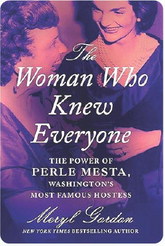
Until now. Outlined in the 486page book, “The Woman Who Knew Everyone: The Power of Perle Mesta, Washington’s Most Famous Hostess,” Meryl Gordon’s book tells the story of Mesta’s political life. From her marriage to Pennsylvania steel manufacturer and engineer George Mesta, to her friendships with Presidents Harry Truman, Dwight Eisenhour, Richard Nixon and Lyndon Johnson, Mesta’s story is a unique and unusually Oklahoman look at the country’s history from World War II onward.
“That evening, as the Marine Corps band played ‘Hail to the Chief,’ Perle made a grand entrance at the ball on the arm of President Truman,” Gordon wrote. “Photographers captured Perle beaming with joy, wearing an elegant ivory satin gown with gold brocade, diamond clips and elbow-length gloves.”
That simple paragraph describes Mesta’s impact – from widow to society hostess to being named the ambassador to Luxembourg, Gordon has done extensive research on her subject.
Mesta’s story is based on thousands of documents, stories and interviews and gives the reader a deep-dive look into Mesta’s life and her countless high-end dinner parties.
Gordon details Mesta’s connections, her ability to span the bridge of American politics by having connections on both the Democratic and Republican sides of aisle and her willingness to spend money. And, yes, she spent a lot of money.
Widowed at an early age, Mesta spent the rest of her life connecting people in various political and social circles. Her dinner parties were legendary and, while there were thousands of stories written about her, she remained connected to her Oklahoma roots, returning to Oklahoma City regularly.
But she didn’t just focus on Washington, D.C.
Mesta connected with actors and Broadway icons such as Angela Lansbury and Ethel Merman.
By the time of her death in March of 1975, Mesta had become a political and cultural legend. The story of her life offers a unique look at American politics from a different view, one created by an Oklahoman who always had time to talk. The book is a good read – especially for those who enjoy state history.
“The Woman Who Knew Everyone: The Power of Perle Mesta, Washington’s Most Famous Hostess” is published by Grand Central Publishing, a part of the Hachette Book Group.