


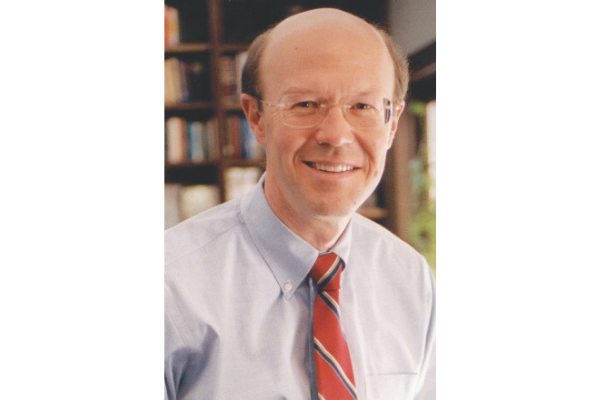
OKLAHOMA CITY – The cost of the Oklahoma Universal Service Fund (OUSF), which subsidizes small companies that provide telecommunications in rural areas in order to keep their services affordable to customers, has “gone through the roof,” state Corporation Commissioner Bob Anthony asserts. “And the worst is yet to come,” he warns. State statute mandates that each telephone provider must pay an assessment that underwrites the OUSF.
All telephone companies, VoIP (Voice over Internet Protocol), prepaid, cellular, etc., “pay into the OUSF at the same percentage,” said Brandy Wreath, director of the Corporation Commission’s Public Utility Division.
Because of a deficit in the fund, the commission voted in May to quintuple the OUSF contribution rate for Fiscal Year 2020: from 1.2% to 6.28%, effective July 1.
The percentage is applied to the companies’ retail revenues from intrastate (in-state) telecommunications services and Voice over Internet Protocol service, as specified in state law.
The new assessment rate for the state Universal Service Fund will generate more than $53 million in FY 2020, Anthony said. “And even higher surcharges are soon to follow.” Subscribers to large phone companies such as AT&T, Verizon, Cox, and Sprint will pay for most of the rural service subsidies, Anthony said.
The Corporation Commission was informed by AT&T that its OUSF assessment will jump from 75 cents per month to $3.91 per month. Another company raised its fee from 57 cents a month to $3.26, Anthony said.
“When we increased that fee, we started getting phone calls from the public, and members of the Legislature were sending us emails about them receiving complaints from their constituents,” Anthony said.
STATE FUND ‘DEPLETED’
The federal and state universal service funds:
• support Lifeline, which provides discounted wireline and wireless services for low-income consumers;
• provide financial support that’s necessary for the provision of telemedicine services in rural areas;
• underwrite a Connect America / High-Cost fund that subsidizes carries which provide voice and broadband connectivity in expensive (primarily rural) areas;
• provide funding for broadband access and other communications support for public schools and libraries. (By the end of last year, 1,248 schools in Oklahoma had fiber infrastructure, said Brandy Wreath, administrator of the OUSF.)
Disbursements from the Oklahoma Universal Service Fund totaled $18.5 million in FY 2018 and $24.9 million in FY 2019. Monthly ending balances have declined precipitously since last spring: from $17.7 million in May 2018 to $3.2 million in June 2019, ledgers reflect.
“The fund ... has been depleted,” Wreath, director
of the Corporation Commission’s Public Utility Division, informed the three commissioners and agency staffers in a July 25 memo. Because of the shortfall, payments on invoices from telephone companies are being prorated “as funds are available,” said Kris Prouty, the commission’s OUSF payment manager.
“I am absolutely 100 per- cent in support of the programs that help schools, hospitals, libraries, and the Lifeline,” Anthony said. They are “worthy beneficiaries.” But he’s highly critical of several OUSF features.
COMMISSIONER IRKED ABOUT SUBSIDIES...
The federal USF produced $268 million for Oklahoma in 2017, ledgers reflect. “That was a quarter of a billion dollars,” Anthony emphasized. Of that amount, $64.87 million was earmarked for the Lifeline program, $51.79 million was allocated to public schools and libraries, $6.8 million was devoted to rural health care facilities.
The remainder, $144.7 million – more than half, almost 54% – was designated for high-cost support.
“That was support to small ‘phone companies and their owners,” Anthony said. And that’s one of the USF features that gives him heartburn.
AT&T’s service area encompasses more than half of Oklahoma, and Pioneer Telephone Cooperative provides service to roughly a quarter of the state. The remaining areas receive their telecommunications services from approximately 40 relatively small, independent telephone companies.
Legislators and ratepayers alike “should be curious to know how many ... telephone companies with fewer than 1,000 customers receive annually over $1 million each in subsidies,” Anthony said.
Since the state Constitution designates telephone companies as regulated public utilities “and they receive multimillion-dollar subsidies, shouldn’t the OUSF payouts and the number of subsidized phone lines be public, not confidential information?” Anthony maintained. Ratepayers “should know how much subsidy they’re paying per telephone line to provide service in rural areas.”
...AND EMPLOYEE PAY
The commissioner, who is serving his sixth and final six-year term, said he wants to know “how many rural phone company employees (occasionally in the same ownership family) have annual compensation over $100,000.”
The number of access lines of the rural telcos was included in annual reports submitted to the Corporation Commission on April 1, 2019, but other information, such as the number of employees and their salaries, is treated as confidential under agency rules that were adopted 15 years ago.
“Nobody lifts an eyebrow when oil company execs make $50 million in salary and benefits,” said Tom Karalis, executive vice president of the Oklahoma Telephone Association.
A qualified manager or qualified technical supervisor in a small telco “could go to work for AT&T and make a lot more than they can make” at a small rural telco that has “no advancement opportunities and no pension,” said Dick Segress, CEO of Terral Telephone Co. in southern Jefferson County. “So, yeah, some of them are going to receive what some people believe to be a high salary.”
Jerry Whisenhunt, general manager and part-owner of Pine Telephone Co. in Broken Bow, told a State Capitol reporter that he is paid $150,000 a year to manage the company. An electrical engineer who has worked for 35 years, Whisenhunt said his salary is reasonable because he could earn more in the private sector.
“I have the same fiber optic cable and switch that AT&T has, yet AT&T has multiple guys doing that job whereas I have one,” Segress said. “Yes, we pay a competitive wage to hire and retain such people.”
‘MAKE WHOLE PROVISION’ A BOTTOMLESS PIT?
Anthony objects strenuously to the “dubious make whole” provision in the OUSF and wishes the Legislature would impose a monetary cap on it or repeal it. “That is the vehicle through which some of the greatest abuse can occur,” he said. State statute decrees that if a Federal Communications Commission “order, rule or policy” or a state action decreases the USF revenue of an eligible local exchange telecommunications service provider, the local provider “shall recover the decreases in revenue from the OUSF.” The local telco can recover “reasonable investments and expenses” that aren’t reimbursed from the federal USF.
Anthony and Commission Chairman Todd Hiett both have expressed concerns that as the federal government shifts its emphasis from “plain ‘ol telephone service” to broadband services (high- speed voice/data/video communication), the state OUSF “will likely have to make up the difference.”
The FCC “has cut way back” on its USF contributions, Segress said. FCC reports show that federal USF payouts in Oklahoma were $289 million in 2016 but dropped to $268 million in 2017.
AIRPLANES ESSENTIAL FOR SOME TELCOS
Anthony seems to be particularly incensed about expensive artwork and airplanes that he says the USF has been billed for in the past. The commissioner said he believes the public should be told which of the smaller rural telephone companies own airplanes.
“Some of our members have an airplane, but that’s because they have to travel long distances to service their territory, or to visit another local telephone exchange, or to meet with regulators or lawmakers in Oklahoma City or Washington, D.C.,” Karalis said. “They’re not using it to go on vacation.” Also, “If they have a plane, they’re probably leasing it – and it’s not one of those plush $10 million airplanes, either.”
Panhandle Telephone Cooperative, based in Guymon, has an airplane.“It would be inefficient for them NOT to have one,” Segress said. Guymon is 264 road miles from the Corporation Commission’s headquarters in Oklahoma City. And the distance between Kenton, at the western edge of Cimarron County near the Oklahoma/ New Mexico state line, and Laverne in Harper County on the eastern edge of Panhandle’s service area, is approximately 182 miles.
The Hilliary family, which owns the Medicine Park Telephone Co., also owns Oklahoma Western Telephone Co., which passes more than 3,000 homes spread out over 1,500 miles in eastern Oklahoma from the Indian Nation Turnpike to the state line at Big Cedar.
They also own the Electra, Texas, Telephone Co., which serves as a “bedroom” community near Wichita Falls; the Tatum Telephone Co. in east Texas about 143 miles southeast of Dallas, Texas, and an hour west of Shreve- port, La.; and a telco that serves the unincorporated areas of Zapata County, an hour’s drive south of Laredo in far south Texas on the U.S./Mexico border.
The Hilliarys have a company that operates a Cessna Citation 1 jet airplane that’s parked at Wichita Falls, Texas. Hilliary family members and company employees use the aircraft for business travel, according to JJ Francais, special projects director for Hilliary Communications.
“It’s not a luxury jet,” he added. “And it’s not in the phone companies’ rate base.” Travel by air is quicker than by car, Francais noted. From Medicine Park, a trip to the Hilliarys’ telcos in eastern Oklahoma is a four-hour drive; a flight, though, takes about 30 minutes. Zapata, Texas, is a 12-hour, one-way drive but an hour and 40 minutes by air.
TELCO USF INVOICES AUDITED
Expenses invoiced to the Oklahoma Universal Service Fund are paid only after they are reviewed by the Public Utility Division’s staff and with Corporation Commission approval.
Terral Telephone Co. “is audited every year,” Segress said, “and our expenses must meet specific criteria: Is it used, and is it useful to the public interest? If so, it can be included in our rate base.” Furthermore, “I have the same regulatory reporting requirements as Pioneer Telephone Cooperative with their tens of thousands of customers,” he said.
Terral Telephone Co. also is audited by the Universal Service Administrative Co., an independent not-for-profit designated by the Federal Communications Commission to administer the federal USF.
“They come in and look at everything we do,” Segress said. “They check for peanuts on the floor,” he quipped. “If they detect any abuse whatsoever, they take it out of our rate base.”