

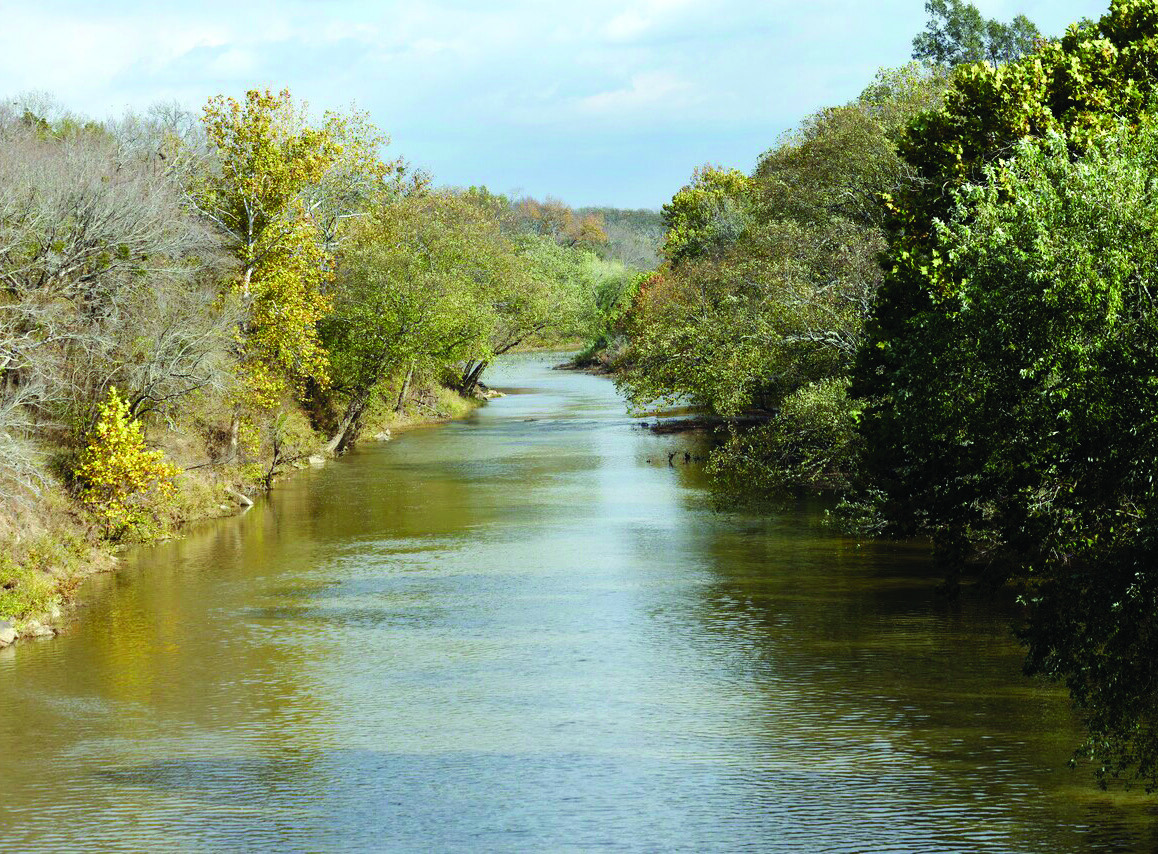
More than 500 Oklahomans and numerous Texans, two Native American tribes, state and federal wildlife officials, an Oklahoma congressman and one from Texas, Oklahoma Attorney General Gentner Drummond and former Attorney General Mike Hunter, two rural water districts, three towns and the commissioners of two Oklahoma counties – all have expressed opposition to the proposed hydropower plant that would be constructed on the Kiamichi River in Pushmataha County to generate electricity exclusively for Texas.
The Federal Energy Regulatory Commission invited public comments about the Southeast Oklahoma Power Corporation’s proposal. In response, the regulators have received a blizzard of letters.
Several McCurtain County residents sent missives to FERC, opposing the SEOPC project. They included Jerri Sue Baken and Billy Joe Baken, Valliant; Larry and Mattie Ferguson, Valliant; Linda Benson, Broken Bow; Carolyn Mussett, Garvin; Sarah Trusty and Dinna Trusty, both of Wright City; Deb Donaldson, Garvin/Valliant; Edith Donaldson, Garvin, tribal member of the Choctaw Nation; Ellis D. Taylor, Charles Holt Jr., L. Gates, Carolyn Bohanan, Rita J. Holt and Valerie Holt, all of Wright City and all tribal members of the Choctaw Nation.
Gabrielle Moore of Tuskahoma informed FERC that “a lot of this land is communally owned by families… Culturally it is very common for indigenous families to hold land in common.”
Moore also noted, “We were already forcibly moved here, and I don’t want to again be forced off land that should be sovereign and protected.”
Other opponents of the project are Nadine Smith and Verna Todd; both are from Ada and both identified themselves as citizens of the Choctaw Nation. Also opposed is Casey Camp Horinek of Marland, a Ponca Tribe elder, a Native rights activist and an environmentalist.
Solomon Billy Jr. of Rattan, in a letter to FERC, quoted former President Theodore Roosevelt: “Leave it as it is … The ages have been at work on it, and man can only mar it.”
‘Seems to be shady, disgusting land grab’ Megan Dees of Clayton described the SEOPC plan as “a disgusting land grab aimed to rape our land and resources without any consideration to the impact it would have on the communities, landowners and tourism, and the endangered species that call the Kiamichi River home.”
Lea Fourkiller of Albion had a similar response. The SEOPC application was submitted by investors “solely for financial gain and profits.” The identities of those investors have not been disclosed “and it is evident they are not the Oklahoma community and may not even be citizens of the United States.”
The president of SEOPC is Johann (Yau On) Tse, who has numerous ties to China.
His office is in Dallas, Texas.
Electricity generated by the proposed hydro plant would be transmitted via a 100-milelong, 345-kilovolt transmission line that would extend from the SEOPC powerhouse in Pushmataha County to a substation at Valliant in southwestern McCurtain County, and continue on to Lamar County, Texas, where it would connect to an Electric Reliability Council of Texas (ERCOT) substation at Paris.
Kristin LaRue of Paris wrote that she is concerned about the safety of her children, other students and staff who attend a school that is close to the Paris substation. She also said she lives “in the area of ” the proposed power line and wonders, “How will this line affect our property values?” She concluded her comments to FERC by declaring that “none of it benefits my area in the slightest and seems to be a shady land grab.”
“The south-central portion of Lamar County has been overrun with solar panels within the past couple of years,” wrote Terri L. Baughn of Paris, Texas. “Now they want to run a transmission line through our homes and land. Where does it end?” Baughn asked FERC.
“I oppose this project,” echoed Ryan Armstrong of Paris. It would “run through my property.”
Southeast Oklahoma ‘raw, pure, pristine’ Richard Thompson, who lives in Texas but said he’s owned property in southeastern Oklahoma “for 25 or 30 years,” told FERC that earlier this year he was in a business meeting that was attended by “about 15 people.”
Somebody mentioned the K Trail, an off-road trail along the Kiamichi Mountains ridgeline, “and four different people in that room started talking about their experiences and how they enjoyed that area.”
The “industry” of that area is “lifestyle and recreation,” Thompson wrote. “The fact is that it’s raw and pure and pristine. And it’s one of the few places that you can own land, private land.” He said he owns a mile and a half of land along both sides of a creek in southeastern Oklahoma “and the land is basically untouched.”
Max Redding of Snow, approximately 20 miles east of Antlers, wrote that he has lived in southeastern Oklahoma for more than 50 years. Big Cedar Creek, which flows through his property, “has decreased dramatically in the past few decades.
We go months at a time with little or no flow at all.”
Consideration of a permit for the SEOPC project “must take into account present-day hydrological studies of the true amount of water in our watershed,” Redding asserted.
Bobby Freeman of Hugo owns property downstream from SEOPC’s proposed hydropower project.
He expressed concern “about the groundwater levels if so much runoff is captured upstream.”
He is dependent on a water well “for my home and livestock use” because there is no rural water district “in our area.”
‘This is personal.’
Mikayla Pierce of Talihina, in a letter filed Sept. 30, wrote that she was “about to get married and build a house on my parents’ land.” She has lived there her “entire life,” she said, “and I want to raise my children here.
This is my home – the only home I have ever known.”
The SEOPC project would destroy “my home and my future, as well as my children’s future,” she declared.
For Naomi Acuna Pryor, family property in southeastern Oklahoma has a deep connection to ancestors.
“My sister lives on land that will be underwater if this project is approved. She moved to Kiamichi Valley from California with the hopes and dreams of our family resting on her shoulders. She was led to the area with her husband, and baby on the way, looking for our Choctaw great-grandmother’s grave. In doing so she fell in love with the land and its rich community, and decided to move to Kiamichi Valley.
“My sister and her husband now have a thriving family farm, something my great-grandmother never had,” Pryor continued. “As a Choctaw native, my great-grandmother was never granted land and resources and lived life in poverty and scarcity.
The land that is being threatened by the hydroelectric closed-loop power project is the home my great-grandmother never had.
The land is a priceless gift to my family. It is part of a dream that is sacred. This is personal. There are real lives being affected by this proposed project.”