

OKLAHOMA CITY — The former president and chief executive officer of a failed Lindsay bank is accused of 18 crimes outlined in a 19-page indictment issued Wednesday by a federal grand jury in Western District federal court here.
Danny W. Seibel, 54, of Lindsay, is charged with one count of conspiracy to commit bank fraud; five counts of bank fraud; 10 counts of making false entries in the books and records of a financial institution; one count of obstructing the examination of a financial institution; and one count of failing to implement an anti-money laundering program.
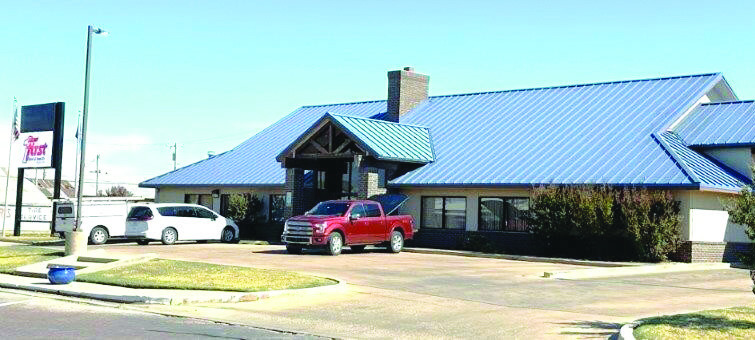
The First National Bank of Lindsay was closed Oct. 18, 2024; the Federal Deposit Insurance Corp. was named receiver; and the bank’s insured deposits were transferred to First Bank & Trust Co. in Duncan.
The Office of the Comptroller of the Currency closed the bank after uncovering “false and deceptive bank records suggesting fraud,” which the OCC stated led to depletion of the bank’s capital. The OCC found that the bank was in an unsafe or unsound condition to conduct business, and the bank’s assets were less than its obligations to its creditors and others.
The cost of the bank failure to the FDIC’s Deposit Insurance Fund was estimated at $43 million.
The Comptroller’s office referred the matter to the U.S. Department of Justice for investigation.
The full balance of all insured deposit accounts in the Lindsay bank was transferred to First Bank & Trust Co., the FDIC reported. The First National Bank of Lindsay’s locations reopened Oct. 21, 2024, as branches of First Bank & Trust Co. during regular business hours.
The FDIC reported First Bank & Trust agreed to assume the Lindsay bank’s insured deposits at a premium of 6.67% and purchased approximately $20 million of the failed bank’s assets. The FDIC retained the remaining assets for future disposition.
“As of June 30, 2024, The First National Bank of Lindsay reported total assets of $107.8 million and total deposits of $97.5 million,” the FDIC reported. “Approximately $7.1 million of the deposits exceeded FDIC insurance limits, but this amount is likely to change once the FDIC obtains additional information from customers.”
‘Cooking the books’ According to the federal indictment, Seibel served as president and CEO of The First National Bank of Lindsay from about February 2007 until his termination in September 2024. Seibel also held other management roles at the bank during that time, including chief financial officer and bank secrecy act officer.
It is alleged that Seibel caused the bank to issue loans to certain customers, many of whom were his personal friends and neighbors, which the borrowers never repaid.
The indictment alleges that one FBNL customer, identified simply as Borrower #1, owned a trucking company “and other businesses based in Lindsay.”
Borrower #2 was “a friend” of Seibel’s who owned several automotive businesses “in and around the Lindsay area.”
Borrower #2, also a customer of FNBL and a friend of Siebel, owned and operated an HVAC business that “often serviced marijuana grow operations.”
Seibel allegedly manipulated the bank’s records and fiddled with various bank reports to falsely overstate the performance of the loans, including by using new loans or transfers of the bank’s own funds to cover overdrafts of outstanding loans.
The indictment further claims that Seibel frequently modified bank records to conceal this activity from the OCC, which was the bank’s federal regulator, as well as from the bank’s board of directors and others.
During the summer of 2024, when the OCC was conducting an onsite examination at the bank, Seibel allegedly provided OCC staff with a false document that concealed hundreds of changes that Seibel had made to loan data.
The indictment also alleges Seibel failed to implement an anti-money laundering program at the bank as required by the Bank Secrecy Act. For example, Seibel failed to file any suspicious activity reports on his own fraudulent scheme, and he advised bank customers to make cash deposits below $10,000 to avoid relevant reporting requirements, prosecutors allege.
If convicted, Seibel faces up to 30 years in federal prison and a fine of up to $1 million.
The case was investigated by the FDIC’s Office of Inspector General, the Federal Bureau of Investigation, the Internal Revenue Service, and the Federal Housing Finance Agency’s Office of Inspector General.