

OKLAHOMA CITY – In its lawsuit filed in the Western District federal court here on Jan. 6, Westwin Elements and its founder, KaLeigh Long, described Kamran Khozan as “a Canadian con artist” who conspired with others to defraud her company which was “founded to help solve America’s critical minerals crisis.”
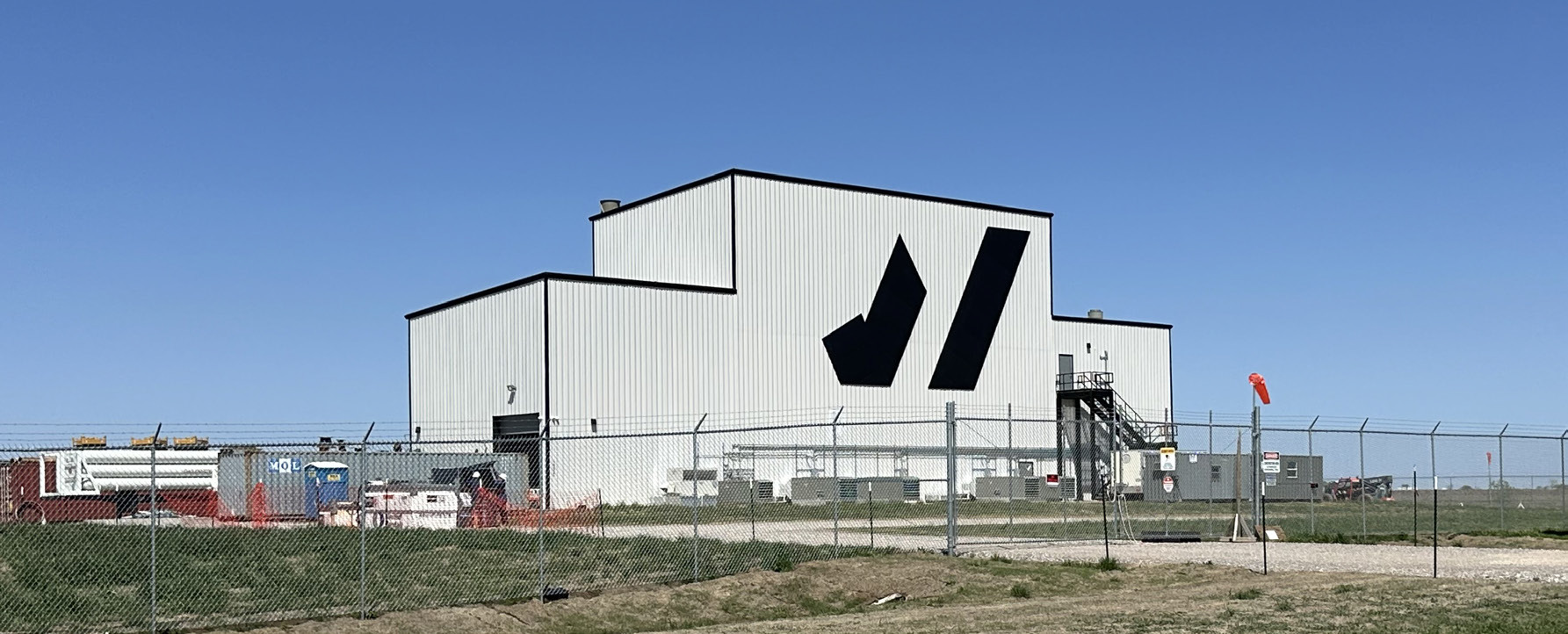
Westwin was incorporated in Delaware and was founded in Bartlesville, but moved its principal place of business to Oklahoma City. The company was established by Long, an Oklahoma native, “to help eliminate America’s dependence on foreign sources … for refined nickel, cobalt, and manganese.” Westwin is building “America’s first” cobalt and nickel refinery in Oklahoma, and its demonstration plant opened in Lawton last August.
Westwin sued Chemical Vapor Metal Refining (CVMR) and Khozan, its founder, to recover $3 million it says it paid in January 2023 for a feasibility study that was never delivered.
In their counterclaim, Khozan says that in October 2022 CVMR submitted to Long a “proposal for a bankable feasibility study” – a report with “sufficient detail of a project’s viability to attract investment and financing from investors or lending institutions.”
According to Khozan, the estimated cost for “the tests, piloting, and drafting of the feasibility study – including marketing analysis and discounted cash flow projections,” was $5 million.
Long’s lawsuit claims that besides the $3 million, CVMR and Khozan also cost Westwin hundreds of thousands of dollars in expenses and lost time “pursuing a completely fraudulent joint venture…” Westwin wants monetary damages “in an amount to be proven at trial,” along with punitive and exemplary damages.
In a counterclaim filed March 25, Khozan, who lives in Ontario, Canada, and CVMR, a “metal refinery technology provider” that Khozan created in 1986 in Toronto, Ontario, Canada, alleged that Long and Westwin are “inexperienced, unsophisticated, and unqualified to safely perform the chemical processes involved in Westwin’s enterprise,” and made “numerous intentional and material misrepresentations to CVMR and Khozan…” Khozan claimed that in 2022 he spoke with Long by telephone, and during the call she “described herself as a Republican pollster whose company generated approximately $14,000 in monthly revenue.” She also “touted her personal relationships within the highest levels of Republican political circles,” Khozan said.
Long also said she had deep connections to the Democratic Republic of Congo (DRC), “one of the world’s largest and most significant sources of cobalt,” and had a personal relationship with the president of DRC, “who promised her unlimited access” to his country’s cobalt, Khozan claimed.
During that phone call, Khozan wrote, Long also said she had “secured $126 million from XM Bank to fund Westwin, an entity she intended to create for purposes of building the first cobalt refinery in the United States.”
However, Khozan said he later discovered that Long “intentionally and materially misrepresented her connections in the DRC and the $126 million in financing from XM Bank.” Westwin/CVMR drifted apart CVMR and Khozan offered to create a partnership with Westwin, “touting CVMR as a world leader in refining technology with exclusive, patent-protected capability to produce refined cobalt, nickel, and other mineral in quantities and qualities “superior to others in the industry,” Westwin alleges.
CVMR is “engaged in the business of mining and refining mineral resources in at least 18 countries,” the company states in its counterclaim.
For almost 40 years CVMR has refined metals “using proprietary processes that are environmentally neutral,” Khozan claims.
The company’s proprietary technologies “enable it to refine metals directly from laterite or sulfide ore concentrates, tailings, scrap metals, and even radioactively contaminated metals.”
CVMR uses refined metals to manufacture metal powders, coatings, and net shapes of various kinds, it claims. CVMR has “extensive experience working with 36 different metals, including nickel, iron, and cobalt,” Khozan states in the counterclaim.
Long said she had acquired a site for the proposed plant and “just needed CVMR’s technology to make Westwin a reality,” the counterclaim alleges Khozan also wrote that Long also represented in an email that “Lawton-Fort Sill had committed ‘$9.32 million upfront cash and $12 million in land’…” Via “patently false representations about CVMR’s technology, employees, experience, and operational capabilities,” the defendants “fraudulently induced Westwin” to “form a joint venture to build and operate a refinery in Lawton, using CVMR’s alleged proprietary vapor metallurgy technology and processes,” Long and Westwin assert.
Westwin charges that Khozan; Michael Hargett, president of CVMR; and two other defendants, falsely claimed that CVMR:
• Had active operations in Oak Ridge, Tennessee, “and would be moving its headquarters there.”
• Had mining operations and access to feedstock in multiple countries.
• “Generates billions of dollars in revenue annually and employs thousands,” constantly referring Westwin to “an inaccurate report” by Dun & Bradstreet for support.
• Employs engineers – one of whom had died years earlier – who would be responsible for operations of the joint venture.
• Produced in its (nonexistent) Turkey refinery samples of cobalt nitrate that it presented to Westwin and one of its prospective customers for testing during due diligence.
• Was opening a plant in Amarillo, Texas.
Southwest Ledger confirmed that the Amarillo project never materialized.
Production capability was ‘unrealistic’ According to Long and Westwin, Khozan and CVMR misrepresented CVMR’s actual past production and current production capabilities “at levels it later had to admit were ‘unrealistic’…” In addition, the requisite technology “is not proven on a commercial scale anywhere in the world.”
The defendants also misrepresented that their pilot plant in Canada was “turned off for safety” reasons during Westwin’s due diligence visit. Actually, the plant had been “inoperable for many years” – which explained “the lack of employees present.”
An agreement between Long and Khozan provided that CVMR would “design and construct” a refinery for Westwin capable of producing 10,000 tons per annum of refined product “for an estimated cost to Westwin of approximately $150 million.”
However, CVMR “later admitted” that production capacity of 10,000 tons annually of refined product was “unrealistic” and the requisite technology “is not proven on a commercial scale anywhere in the world,” Westwin alleges.
CVMR also “admitted” that the cost to design and construct the refinery – “if the requisite technology had existed” – would have “vastly exceeded” $150 million. In fact, Westwin wrote, a third party said that a 10,000-ton refinery would cost approximately $1.5 billion.
Westwin further alleges that Khozan “and his ring of co-conspirators” have perpetrated “their fraudulent scheme” on “numerous other persons and entities” throughout the world, establishing a “clear pattern and practice” of “intentionally and maliciously stealing money through outright lies and deception.”
The case is still pending in Oklahoma City’s federal district court.
Westwin ‘pivoted’ Since the collapse of the joint venture with CVMR, Westwin has “pivoted” to “a proven technology” that “has been around for more than a century,” said Richard Rogalski, executive director of the Lawton Economic Development Authority.
Westwin is producing nickel, “and once they’re up and running they might transition to other minerals, as well, or into another line,” Brad Cooksey, president of the Lawton-Fort Sill Economic Development Corporation, told the Ledger. The company has approximately 45 employees, he said.
The Lawton City Council approved a resolution on March 25 that appropriated $9 million to the city’s General Fund for “an anticipated future payment per the terms of the amended Redevelopment Agreement” between the City of Lawton, the Lawton Economic Development Authority, the Comanche County Industrial Development Authority, and Westwin Elements.
The amended agreement, which was approved in December 2023, stipulates that the city’s funding is to be placed in escrow by June 1, 2025, or 180 days after the operational date of Westwin’s pilot plant, which was Dec. 6, 2024.
The agreement provides that the City of Lawton will contribute $10 million. The city has paid $1 million to date, and the $9 million will be held in escrow until Westwin meets specific benchmarks, Cooksey said.
Besides the city’s financial contribution, the Comanche County Industrial Development Authority (CCIDA) contributed $2 million cash as part of the agreement.
The Lawton Economic Development Authority leases to Westwin the 40 acres on which the company’s pilot plant has been constructed, land that is valued at $12 million. The Westwin site is surrounded by 440 acres that are owned by the CCIDA south of the Goodyear tire manufacturing plant in southwest Lawton.
“We’ve protected ourselves” should the Westwin project fall through, Cooksey said. For example, “We own that building, we have a mortgage on it.” In addition, infrastructure that serves the site includes water, sewer, and electric lines.
Conversely, should Westwin succeed, Lawton and Comanche County both would benefit, Rogalski and Cooksey said. As an example, the company’s ultimate, revised goal is 735 jobs and an investment of $126 million. Those jobs would boost retail sales, housing construction and rehab projects, and generate tax revenue for school support and for construction/ maintenance of streets, water and sewer lines.