

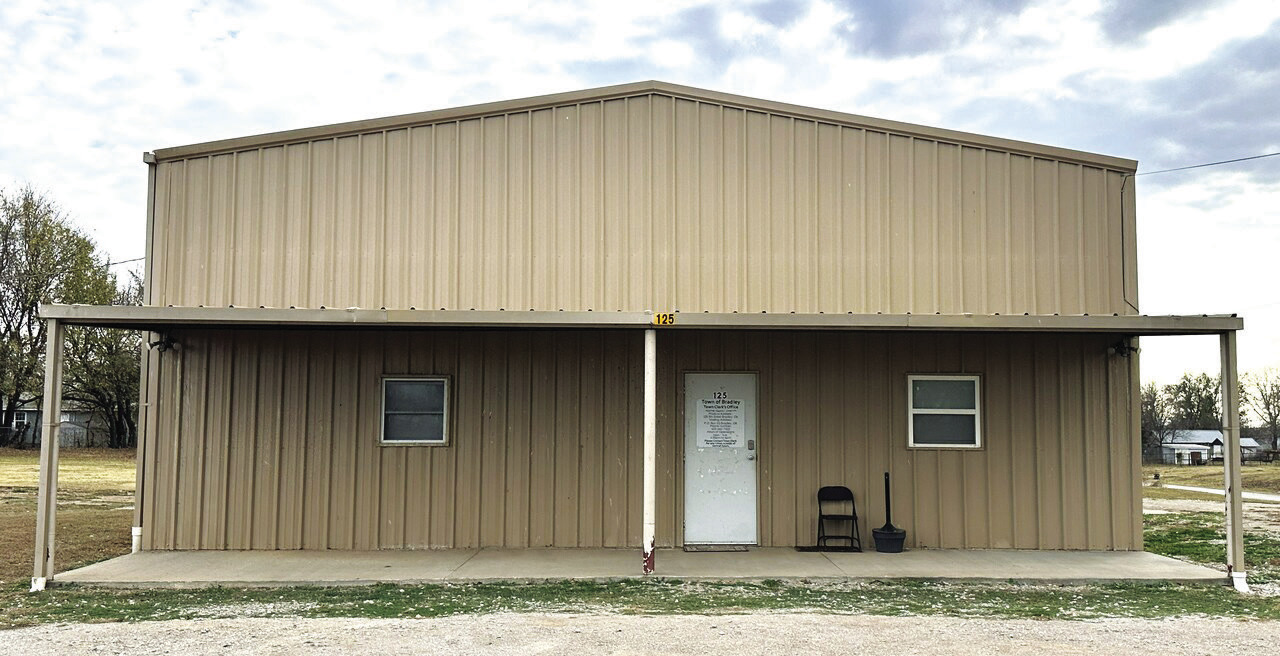
During a municipal election April 6, 2021, in the tiny town of Bradley, Oklahoma, 30 people wrote their names and addresses on the requisite sign-in sheet – but only 27 of them were confirmed to be eligible voters.
One voter signed in twice – which apparently was not noticed by election workers even though only 30 votes were cast during the election.
Two other people signed the poll book “attesting they were registered with the Grady County Election Board at an address located within the geographic boundaries of the municipality” when in fact they were not. Furthermore, during a subsequent state audit, one of those two individuals “stated that they did not cast a vote” in that election.
Consequently, the number of votes cast in both the Town Board and Clerk/Treasurer races in 2021 exceeded the number of registered voters who participated in the election.
As a result, 29 votes were cast in the town board race, resulting in a 15-14 outcome, and 28 votes were tallied in the clerk/treasurer race, resulting in a 17-11 outcome. “This indicates that ineligible votes were cast in both elections,” state auditors wrote.
Nevertheless, no one challenged the results within three business days after the election. “As a result, the election outcomes remain valid,” the state audit concluded.
These were among the findings of a forensic audit of Bradley’s records released last Friday by State Auditor and Inspector Cindy Byrd. She launched the investigation after receiving a citizen petition from Bradley residents requesting an examination of town records for a two-and-ahalf- year period: from July 1, 2018, through Dec. 31, 2020.
Bradley, which is approximately 20 miles southeast of Chickasha, has an estimated population of 85, according to the U.S. Census Bureau.
The Articles of Incorporation, county election board documentation, and the town’s website “indicated that Bradley should have three trustees,” Byrd related. However, a town ordinance explicitly stating the number of trustees that should be elected “could not be located.”
By state law, municipal general elections are held in April in cities and towns throughout Oklahoma. Yet the State Election Board’s website does not show results from any municipal general election in Bradley in April for the last seven years – 2019, 2020, 2021, 2022, 2023, 2024, nor 2025 – Southwest Ledger found.
Similarly, town officials “routinely failed to comply with multiple aspects” of the state’s Open Meetings Act.
For example, they failed to provide notice of regularly scheduled Board of Trustees meeting dates for calendar years 2018, 2019, and 2020, the auditors discovered. A schedule of upcoming meeting dates for the coming year was not filed with the town clerk, as required by statute.
The town board failed to hold meetings on a monthly basis, even though a state law requires a board to “meet regularly at least monthly.”
Bradley trustees canceled their board meetings for January, February, March, July, August, September, October, and December 2018; January, February, March, May, June, July, September, and December 2019; and January, February, and March 2020.
Agendas and minutes could not be provided for eight meetings, “and numerous others lacked critical information such as posting times, board member attendance, recorded actions, and individual votes.”
“Deficiencies” such as those “undermine transparency, public trust, and the board’s ability to demonstrate that Town business was properly conducted,” Byrd wrote.
Two “open records” requests were received by town officials, and neither was complied with in a timely manner.
The mayor told state auditors that the records had been provided. The town clerk, though, “indicated she was unable to fulfill the request” because the records were unavailable for public inspection “due to the lack of a town office, scanner, and/or copier.” Byrd noted that the clerk’s response was not issued until 2022 – after the SA&I office initiated its forensic audit. Financial issues Townspeople also sought an audit of Bradley’s General Fund and Waste Management bank accounts “to determine whether expenditures were appropriate, properly approved, and adequately documented.” They weren’t.
For example, 78 purchases made from the General Fund during the 30-month audit period – 56 food-related purchases and 22 miscellaneous purchases – were reviewed by auditors. None of the purchases “met the threshold requiring a competitive bid process,” auditors reported.
None of the 78 payments that were examined was formally approved or ratified by the Board of Trustees. Receipts or invoices were not provided for five expenditures that totaled $1,812. Also, because of a lack of adequate documentation, auditors were unable to determine whether 58 of the 78 expenditures they tested “served legitimate municipal purposes.”
None of the transactions that state auditors tested was encumbered, as required by state law. The statute “mandates that purchase orders be established and funds encumbered before a financial commitment is made,” Byrd related.
Purchases made for Solid Waste Management purposes “appeared to be appropriate and for Town purposes.” However, they were “not properly encumbered” and the trustees “did not vote to approve or ratify any expenditures paid” from the Solid Waste Management bank account.
Two payments of $500 each, “described as scholarships,” were issued without approval from the Board of Trustees and reeked of nepotism. One payment was issued to Oklahoma City Community College “on behalf of the mayor’s niece.” The other payment was made “directly to the son” of the Grady County Rural Water District #3 secretary, “who is responsible for collecting trash revenue” for the Town of Bradley.
Former Town Clerk Charlene Brown provided Mayor Donna Thornburg with signed blank checks, “because Brown was unaware of the amounts the mayor intended to spend.” The checks were used to buy food for a legitimate purpose – senior citizen dinners – but the practice “bypassed proper financial controls and increased the risk of unauthorized or inappropriate expenditures,” Byrd wrote.
More than $3,000 in cash received from rental of the town’s Community Center and from senior meal donations was not deposited into any town bank account.
Between July 2018 and Dec. 31, 2020, only seven deposits were made into the town’s General Fund bank account. In some cases, checks were held for up to four months before being deposited, contrary to a state law which mandates that all municipal funds must be deposited daily.
“Small towns run on tight budgets,” SA&I Byrd noted. “Minor financial mismanagement can have catastrophic consequences for the citizens who depend on town services. While the dollar amounts cited in this audit report might seem trivial, they highlight the board’s failure to provide proper oversight and accountability.”
The findings of the forensic audit of the Town of Bradley were turned over to the Grady County District Attorney’s Office, Byrd announced.
This was the 103rd audit released by the SA&I office this fiscal year, she said.
Editor’s Note: This is the first of what will be multiple stories about the state audit of the Town of Bradley.