

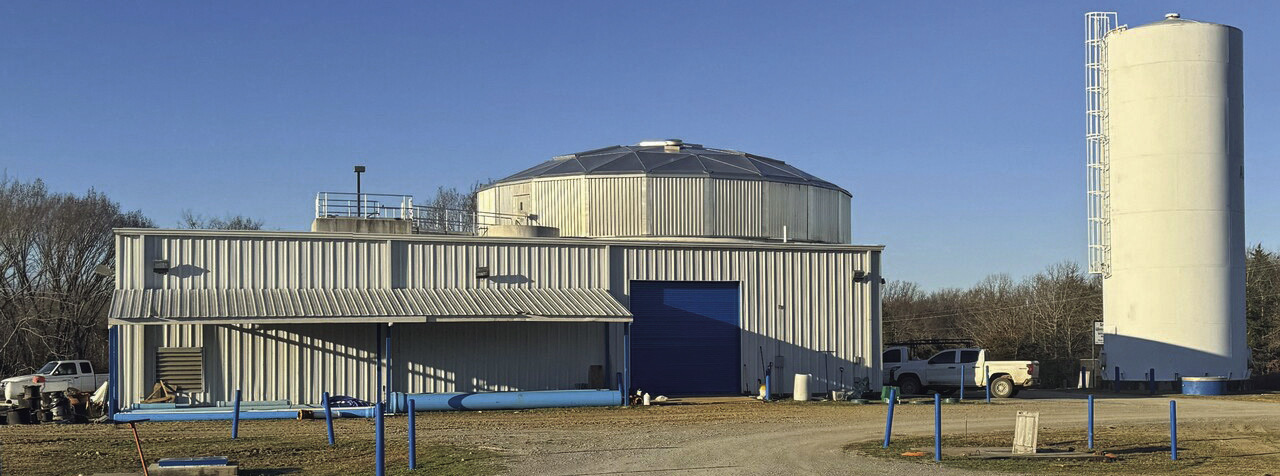
CLAYTON – The Sardis Lake Water Authority will receive $19.3 million to construct a new water treatment plant capable of processing five times as much water as its existing facility.
The U.S. Department of Agriculture is providing half of the project financing, or $9,927,000, ac cording to Kenneth Corn, director of the Oklahoma Rural Development division of the USDA.
Rayna Noah, office manager of the Sardis Lake Water Authority (SLWA), said that funding includes a pair of loa ns totaling $2,506,000, a poverty grant of $4,136,000 and a regular grant of $3,285,000.
The Choctaw Nation will contribute $6,481,350 in American Rescue Plan Act (ARPA) grant funds, and the Oklahoma Water Resources Board will provide $2,896,500 from an ARPA grant, for a total of $9,377,850.
The $2.5 million in USDA loans will be paid back over a 40-year period, Noah said.
“I was honored to join Undersecretary Basil Gooden, Chief Gary Batton of the Choctaw Nation, and the leadership of the Oklahoma Water Resources Board to announce this investment for the Sardis Lake Water Authority,” Corn said. “This is an excellent example of partnerships making a difference that will provide much needed improvements to ensure clean drinking water and the opportunities to provide growth.”
The existing treatment plant was built a quarter- century ago, in about 1999 or 2000, and is approximately seven miles from Clayton off State Highway 2, Chris De-Weese, the SLWA’s plant manager, told Southwest Ledger. The facility was designed to treat 800,000 gallons of water per day, but “at full capacity in the summer” it will produce approximately 600,000 gallons of potable water, he said. “It won’t do 800,000 anymore.”
The Authority’s latest income/expenses report delivered Nov. 13 showed that the treatment plant processed 14,740,833 gallons of water in October, an average of 475,511 gallons per day.
The new plant will be designed to treat 3.3 million gallons of water pumped from Sardis Lake each day, SLWA plant manager Chris DeWeese said, because of anticipated growth in the area.
SLWA has “around 290 customers” and provides treated water to the Town of Clayton, Pushmataha County Rural Water Districts #1 and #5, and Latimer County RWD #2, DeWeese said. In addition, he said, 40 lots are under development in “The Narrows” and another development of “around 1,000 lots” is planned on State Highway 43.
The SLWA has approximately 140 miles of w ater lines, which “we flush regularly to keep up the chlorination levels at the edges of our system,” DeWeese said.
Plans for the new treatment plant were designed by Smith Roberts Baldischwiler engineering firm based in Oklahoma City and Civil Design Solutions of Ada. Their plans have been submitted to the state Department of Environmental Quality, which is “reviewing them now,” DeWeese told the Ledger on Nov. 14.
After bids are solicited and a contract is awarded, construction will take perhaps a year and a half to two years to complete.
In February the OWRB approved a $396,000 ARPA grant for the SLWA that will be matched with an equal amount from the Choctaw Nation. Those funds will be used to replace the Gilley Hill standpipe, install supervisory control and data acquisition (SCADA) equipment, telemetry, and controls to the standpipe, and provide backup power to the Wildwood Pump Station.
Rate hike anticipated The Oklahoma Rural Water Association (ORWA) presented a rate analysis of the SLWA system to its governing board on Nov. 13. The ORWA study indicates that almost certainly – to meet the debt service requirements on its USDA loans, to maintain adequate reserves, and to sustain its system – the district’s water rates will have to be increased by the time the new treatment plant is operational.
According to the ORWA, the SLWA’s cost to provide potable water to its customers is $5.33 per 1,000 gallons, but under one scenario that rate would be raised to $7.41 per 1,000 gallons. Those expenses include administration, labor, utilities, parts and supplies, and purchase of the water. (Oklahoma City bought the storage rights to about 90% of the water in Sardis Lake, but 20,000 acre-feet of water from the lake is set aside for use within the 10-county area surrounding the reservoir.)
The Authority’s minimum rate is $52.62 per month plus $8.50 per thousand for up to 2,000 gallons; $8.70/1,000 for 2,000 to 4,000 gallons; and $9/1,000 for 4,000 to 6,000 gallons. Thus, the cost for 5,000 gallons of usage is $96.02.
The SLWA’s operating ratio, which the American Water Works Association (AWWA) defines as a measure of efficiency and financial health, is 1.56 based on its existing rates. An operating ratio of 1.0 “indicates the utility has just enough cash to pay its bills,” the Association explained. “The ratio should be 1.25 and remain steady or be climbing.”
An affordability index equal to 1.0 or less is considered “very affordable,” the AWWA reported. The USDA Rural Development division indicates that utilities are eligible for grants if their affordability index equals 2.0 or higher. The ORWA calculated SLWA’s affordability index is 2.73%.
Finally, the SLWA’s debtto- income ratio, which reflects the percentage of income used for debt payments, is 17%.