

America’s Civil War was unimaginable in its scale of death and destruction.
The war lasted four years. It started April 12, 1861, with the bombardment of the U.S. military garrison at Fort Sumter, South Carolina, by the Confederate States of America.
It concluded with Robert E. Lee’s surrender of the Army of Northern Virginia to Ulysses S. Grant and the Army of the Potomac on April 9, 1865, and finally the cease-fire agreement signed June 23, 1865, at Doaksville in the Choctaw Nation (now Oklahoma) between Union representatives and Confederate General Stand Watie, commander of the First Indian Brigade of the Army of the Trans-Mississippi.
In between those bookends, an estimated 750,000 men – 2% of the nation’s population – died on battlefields from combat wounds, in hellish military prisons, and from myriad diseases.
“Such numbers are so huge as to be abstract,” an editor wrote. Russian strongman Josef Stalin was quoted as saying, “One man’s death is a tragedy. A million deaths are a statistic.”
Soldiers also died in other, esoteric ways. One man from Illinois was kicked to death by a mule. A New York cavalryman died from an amputation necessitated after he was bitten on one of his thumbs. An Ohioan was killed by a falling tree, and one infantryman died from poisoning contracted when he drank from a bottle found at a deserted house.
At least one Union soldier is known to have died from diarrhea – an everyday ailment that today is cured with an over-the-counter dose of Pepto Bismol.
A wave of epidemic diseases – measles, mumps and smallpox – swept through the armies of volunteers in the early months of the war, followed by dysentery, typhoid, malaria and scurvy. Soldiers of that era also experienced chronic malnutrition and were lice-ridden.
By 1865, the sick rate for diarrhea and dysentery in the Union army reportedly was 995 per 1,000 soldiers.
Disease killed twice as many soldiers as did battlefield injuries in 1861. As much as 30% of the army’s strength might be on sick call at any given time.
The latest research calculated that one in five Southern white men of military age (20-34), and one in nine Northern white men of the same age, died as a result of the Civil War. Historian James McPherson has estimated that 50,000 civilians also were killed during the Civil War.
The first civilian casualty of the War Between the States was Judith Henry. At the First Battle of Bull Run, fought July 21, 1861, at Manassas, Virginia, near Washington, D.C., Mrs. Henry, too infirm to evacuate her home during the fighting, was killed when an artillery shell exploded in her bedroom.
Also killed during the Civil War were more than 1.5 million horses and mules used to haul artillery units and supply wagons. Confederate Gen. Joseph Orville Shelby had 24 horses shot out from under him, and Confederate cavalry commander Nathan Bedford Forrest lost 39 of his mounts.
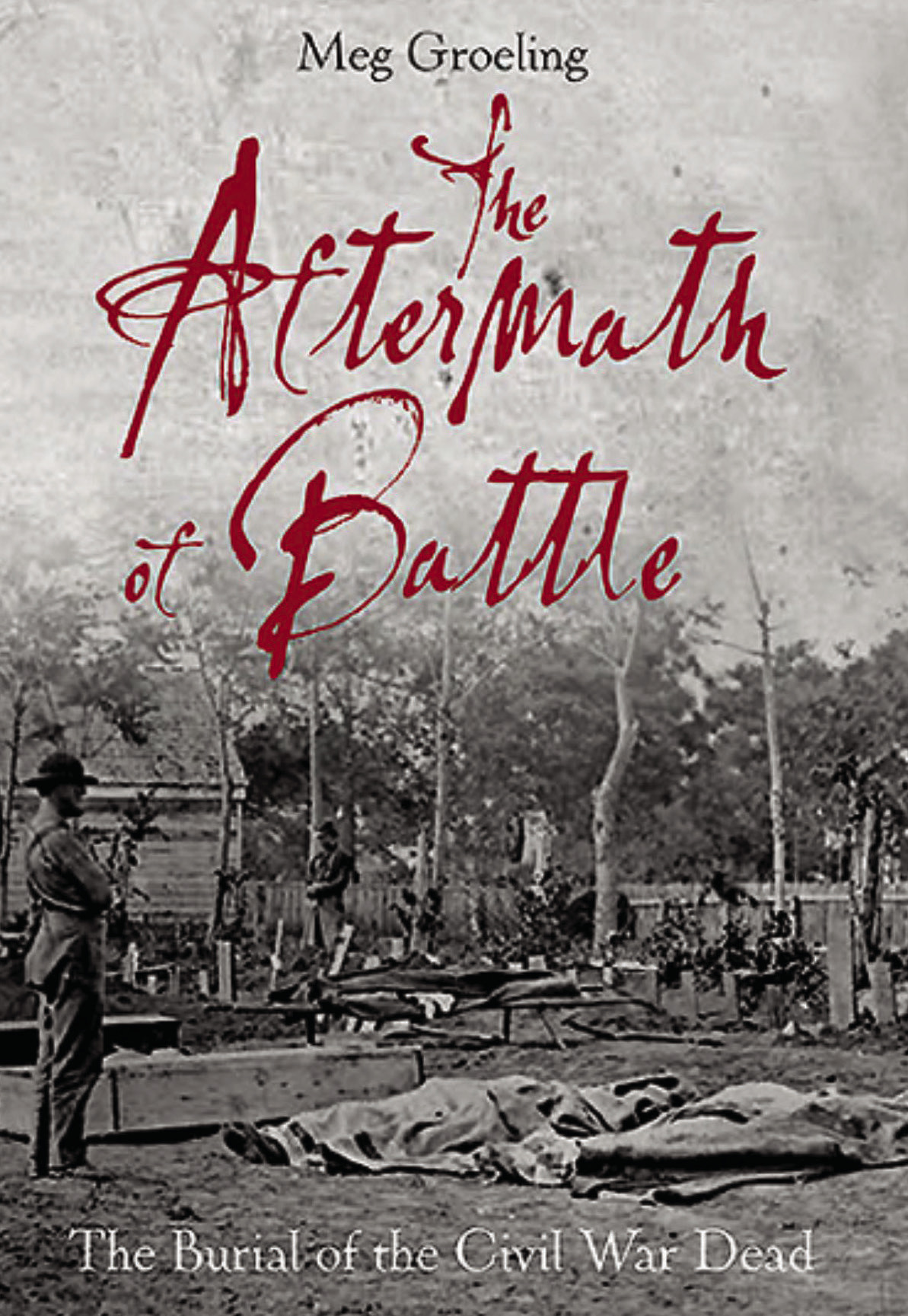
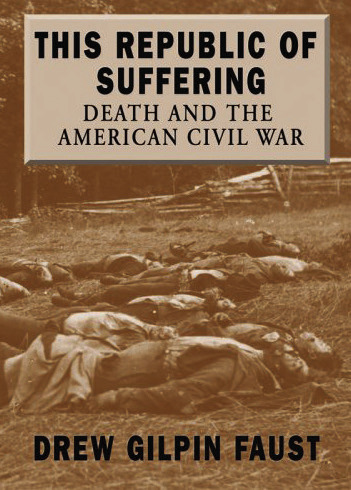
Two books provide details about the gruesome task of disposing of the staggering number of fatalities arising from the Civil War: “This Republic of Suffering,” by Drew Gilpin Faust (2008, Alfred A. Knopf), and “The Aftermath of Battle: The Burial of the Civil War Dead,” by Meg Groeling (2015, Savas Beatie). Previously, Most Americans Died at Home Prior to the Civil War, most Americans died at home, surrounded by family and friends and were buried in family plots.
The Civil War upended that practice.
Thousands of soldiers were buried in an anonymous trench or left to rot somewhere on the battlefield. The wounded often were abandoned to live or die, in blistering heat or freezing cold temperatures, and in rain. More dead piled up – in mass graves, in unknown places, at the bottoms of creeks and rivers, burned to death, starved, frozen, or succumbed to combat wounds or disease.
There was no DNA to help identify anyone, the authors note.
At the Chattanooga Confederate Cemetery, 2,500 unknowns are buried in one mass grave, and historians have identified a dozen Confederate mass graves on the Shiloh battlefield in southwestern Tennessee. (Ironically, Shiloh means “place of peace.” During that 1862 engagement, nearly 3,500 men were killed and more than 16,000 were wounded.)
Feral pigs – wild hogs – feasted on dead and wounded soldiers throughout the war.
The Wilderness of Virginia became “one vast boneyard” after several major battles and smaller skirmishes occurred there in 1863 and 1864. A 70-square-mile forested area was too difficult for recovery and burial of many of the bodies. Additionally, many wounded and slain soldiers burned when the woods caught fire from the intensity of the constant shooting. “The area known as the Wilderness remained one vast cemetery…” The needs of the living “increasingly trumped the dignity of the departed,” Gilpin Faust wrote. For men buried on the field, “coffins were out of the question; a blanket was the most a man could hope for as a shroud.”
Death on a Scale Never Before Experienced The Civil War introduced injury and death on a scale never before experienced.
• The Battle of Antietam Creek at Sharpsburg, Maryland, on Sept. 17, 1862, remains the bloodiest single-day battle in American history. It resulted in a combined count of 22,717 men killed, wounded or missing. A Union surgeon reported that few of the dead soldiers on either side had been buried as late as a week after the battle.
Photographer Matthew Brady and a few associates photographed the aftermath and exhibited the pictures in New York. A New York Times editorial writer wrote of Brady, “If he had not brought bodies and laid them in our dooryards and along the streets, he has done something very like it.” (Remember, this was decades before the advent of television.)
• More than 150,000 Union and Confederate soldiers clashed at Gettysburg, Pennsylvania, a town of about 2,400 residents, for three days in 1863 (July 1-3).
When it was over, that battle had produced the largest number of casualties of the entire war: 50,000+ killed, wounded, missing or taken prisoner. More than 7,000 soldiers were slain, and it took weeks to bury them all. The final field hospital at Gettysburg closed four and a half months after the battle.
Across the battlefield – all 25 square miles of it – “the dead … were found in every nook and cranny imaginable,” Gilpin Faust writes. Combat respected no boundaries, spreading across farms, fields and orchards, into gardens and streets, “presenting civilians with bodies in their front yards, in their wells, covering their corn or cotton fields,” she reported.
One resident of the town wrote that dead soldiers were “lying in the streets, as far as we could see, either up or down.” And a widow at Gettysburg counted 15 dead horses in her front yard.
The battleground also was littered with the detritus of combat: rifles, bayonets, blankets and bedrolls, cartridge boxes, clothing, etc.
Primitive Medical Practices Improved Medical practices were primitive at the outset of the war, but progress was made as the war dragged on. Advances in weaponry had outpaced the army’s medical department organization and battle tactics. Outdated military practices such as massing large numbers of men in front of lethal weaponry resulted in “horrifically high casualty numbers,” Groeling pointed out. For example, of approximately 12,500 Confederates who advanced over open fields for three-quarters of a mile under Union artillery and rifle fire during the notorious Pickett’s Charge on the last day of the Battle at Gettysburg, more than half were killed, wounded or captured in less than an hour.
Amputation was “one of the goriest medical byproducts” of the Civil war, Groeling noted.
After the 1862 Battle of Fredericksburg, Virginia, one soldier wrote a letter home after seeing bushel baskets of severed limbs being removed from a field hospital. In 1866, one year after the war ended, one-fifth of Mississippi’s state budget was allocated to providing prosthetic limbs to that state’s Confederate veterans.
The Civil war saw the advent of first aid and the introduction of triage, a method by which a soldier’s injuries are evaluated and treated in order of priority. Autopsies to determine the precise cause of death were first used in the Civil War. So was embalming, although relatively few deceased soldiers were embalmed because the process was expensive.
Because of changes instituted by Dr. Jonathan Letterman, chief physician for the Union army, Northern soldiers were healthier than their Southern counterparts, and their survivability from wounds improved dramatically.
In July 1862, 37% of the Army of the Potomac was unable to report for duty because of sickness. A year later that number had been reduced to 9%. The mortality rate from wounds dropped from 26% the first year to 15% and then 10% over the next two years.
Novelist Louisa May Alcott and poet/journalist Walt Whitman both worked as nurses during the Civil War, and Clara Barton was a hospital nurse who founded the American Red Cross.
Civil War Prisons Were ‘Hell on Earth’ During the war 194,743 Union soldiers and 215,865 Confederates were held prisoner; 30,218 northerners and 25,976 southerners died in captivity. “Civil War prisons were indeed, as one inmate observed, ‘the closest existence to a hell on earth.’” During the 14 months of its existence, Andersonville prison in Georgia, a 26-acre rectangle, held 45,000 Union prisoners and nearly 13,000 of them – almost 29% – died within its walls from disease, poor sanitation, malnutrition, overcrowding, or exposure, and many who were able to leave died soon thereafter. Capt. Henry Wirz, the prison’s commander, was hanged for war crimes in 1865. Lee’s Home Became Massive Graveyard Brig. Gen. Montgomery Meigs was the Union Quartermaster, a role that ranked him second in importance in the Union army to General- in-Chief Ulysses S. Grant.
Meigs considered the Confederates traitors and harbored an intense dislike of Robert E. Lee, who resigned his commission in the U.S. Army to become commander of the Provisional Army of Virginia.
In 1861 federal troops took control of Alexandria, Virginia, including Lee’s house. As battlefield casualties mounted, Meigs “cast about for new graveyards to accommodate the rising tide of bodies” and settled on Arlington, specifically Lee’s estate. Meigs issued this order: “I want these men buried so close to the house that they [the Lee family] can never live there again.”
That graveyard became Arlington National Cemetery, where Meigs himself was buried in 1892. Other notable Civil War burials at Arlington National Cemetery included Abner Doubleday, a division commander in the Army of the Potomac who is credited with inventing baseball; John Wesley Powell, an officer in the Western armies who became the first American explorer of the Grand Canyon; John Lincoln Clem, a drummer boy who was the youngest noncommissioned officer (age 12) in army history; and Oliver Wendell Holmes, a captain in the Union army who later was appointed to the U.S. Supreme Court. Identification of Victims Became Critical Desperate families, both North and South, traveled by the hundreds to battlefields to search in person for missing fathers and husbands, sons and brothers, cousins and uncles. The possibility of a loved one being entirely lost was a circumstance many civilians found unfathomable and unacceptable.
One man, J.M. Taylor, was still searching for details about his son’s death three decades after the war ended, and John Palmer carried with him to his grave the bullet that killed his son.
Clara Barton wrote that, “The true patriot willingly loses his life for his country. These poor men have lost not only their lives, but the very record of their death. Common humanity would plead that an effort be made to restore their identity.”
After the war, efforts were made to reinter victims in national cemeteries and to identify as many as possible.
Nevertheless, in a cemetery east of Richmond, Virginia, 1,202 of 1,356 dead soldiers remained unknown. Near Petersburg, Virginia, over a three-year period 6,718 bodies of men killed during the war were moved to a new national cemetery; the dead were gathered from more than 95 sites in nine counties, but only 2,139 of them could be positively identified.
Despite best efforts, nearly half of the men killed in the war remained unknown. In the absence of arrangements for burying and recording overwhelming numbers, more than 40% of deceased Yankees and a far greater proportion of Confederates – perhaps 350,000 men or more – perished unidentified.
On July 3, 1938, at Gettysburg, on the 75th anniversary of that historic battle, attended by 1,800 survivors, President Franklin Delano Roosevelt declared, “All of them we honor, not asking under which flag they fought – thankful that they stand together under one flag now.”
The last remaining veteran of the Civil War, Union or Confederate, was Albert Woolson of Duluth, Minnesota, who died in 1956 at the age of 109.
Mike W. Ray is a fifth-generation, award-winning journalist who has 55 years of experience covering municipal, county, state and federal government in Oklahoma and Texas. He can be reached at Mike.Ray@Hilliary.com.