

LAWTON – Farmers and municipal water suppliers are worried about future water supply in Oklahoma, especially in the southwest region of the state.
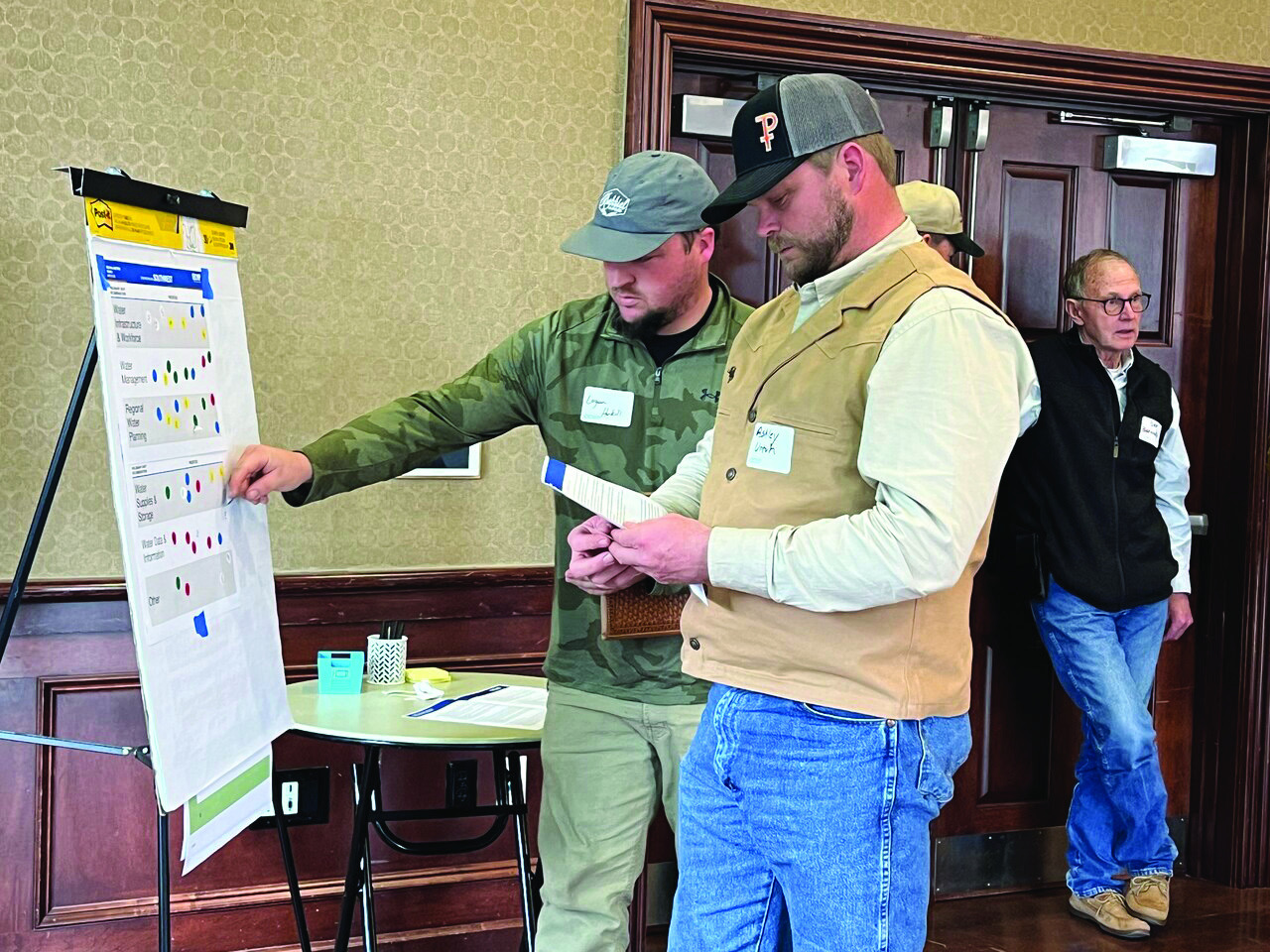
A group of about 50 area residents gathered at Cameron University March 4 to discuss supply and demand, conservation and possible water-related legislation. Among them were several farmers, public works and water conservation professionals.
Farmers, like Kent Switzer, who have been particularly challenged with frequent drought, hoped to learn more about conservation.
“I’m concerned about what the future looks like for our aquifer, and what they might put in place to regulate what we do,” Switzer told Southwest Ledger. “We want to work with them (board), but we also need to make a living.”
The Hydro area grower plants wheat, cotton, peanuts and soybeans, among others. Before 1995, they relied on rain to water their wheat and milo crop, Switzer said. Now the farm has expanded its crops and relies on a conservation irrigation method, droplet technology, to maximize water delivery and minimize evaporation.
Switzer said he and his neighboring farmers want to be good stewards of their water and employ more strategies to conserve it. The less water farmers pump, the less electricity it costs them, he said.
“What we can do I don’t know,” Switzer said. “The only other option is to go (with) low water usage crops but those don’t usually pay as well.”
The Oklahoma Water Resources Board, which is the state’s water permitting agency, listened to attendees as part of an ongoing update to the state’s 50-year Comprehensive Water Plan. The plan is a policy guide for the Legislature and the public.
Employees and members of the board urged residents in the southwest part of the state to identify and support legislation to boost water supply and incentivize conservation.
Owen Mills, the board’s water planning director, said support for proactive policies will be needed from the public and state lawmakers.
“That’s what this is really all about,” Mills said. “You all, and I’m speaking to the choir here, have to help us create that sense of urgency that we don’t want to wait ‘til we have a big problem, even though we’re having problems right now.”
Though new forecasts are not yet set, the current 2012 plan showed the Southwest Watershed was expected to need 20% more water by 2060.
Mills told the crowd that some communities have reported they cannot grow their economy or population more until they find more water or ways to conserve what they have.
So far, communities across the state have reported $24 billion to the board for proposed water infrastructure projects in the next 10 years – nearly double the state’s $12.2 million budget.
The board’s resources are well below that figure, which typically lends up to $300 million to city and county water systems a year, and $100,000 in improvement grants up to $1.2 million a year, Mills told the Ledger.
Several in the group said it would be important to raise awareness about the need for any policies put to the Legislature in order to gain support from constituents.
Matt Muller, Altus area board member, said more education about the value of water should be an important initiative.
“The average Oklahoman underappreciates the value of clean water,” he said. “They will pay more for housing, alcohol and food but they won’t pay a dime more to flush the toilet or take a shower.”
Among 16 proposed policies to generate revenue, none included water utility rate increases, which are set by municipalities and not the state.
Participants considered fees on a yet-tobe- legalized sports betting scheme, medical cannabis, hotel tax and overturning the cap on the gross production tax. They also evaluated additional fees for license plates, bottled water, boat and fees for water-related recreation, water permits, new development and a tax or fee on water transfers from one basin to another. The most popular options were additional fees on medical marijuana, recreation, sports betting and tourism taxes.
The group also ranked its top priorities for other policies, such as data monitoring and enforcement of permit restrictions on water use. Participants most valued regional water planning through collaborations in each watershed, the development of new water sources and education and incentives for conservation.
Regional water planning would mean the creation of local regional water planning authorities to qualify for technical assistance funds, the presentation showed. An authority could determine needs specific to each area and advocate for legislative policies and funding. Such collaboratives could also consider competitive cost-share funding to incentivize member cooperation and longterm planning, according to the presentation.
The board’s new plan update will be published and delivered to the Legislature this fall.
The next in-person public meeting of the Oklahoma Water Resources Board to discuss the Middle Arkansas, Grand, Eufaula, and Lower Arkansas regions will be held from 1-4 p.m. March 25 in the B.S. Roberts Conference Room at Oklahoma State University-Tulsa, 700 N. Greenwood Ave., in Tulsa.