

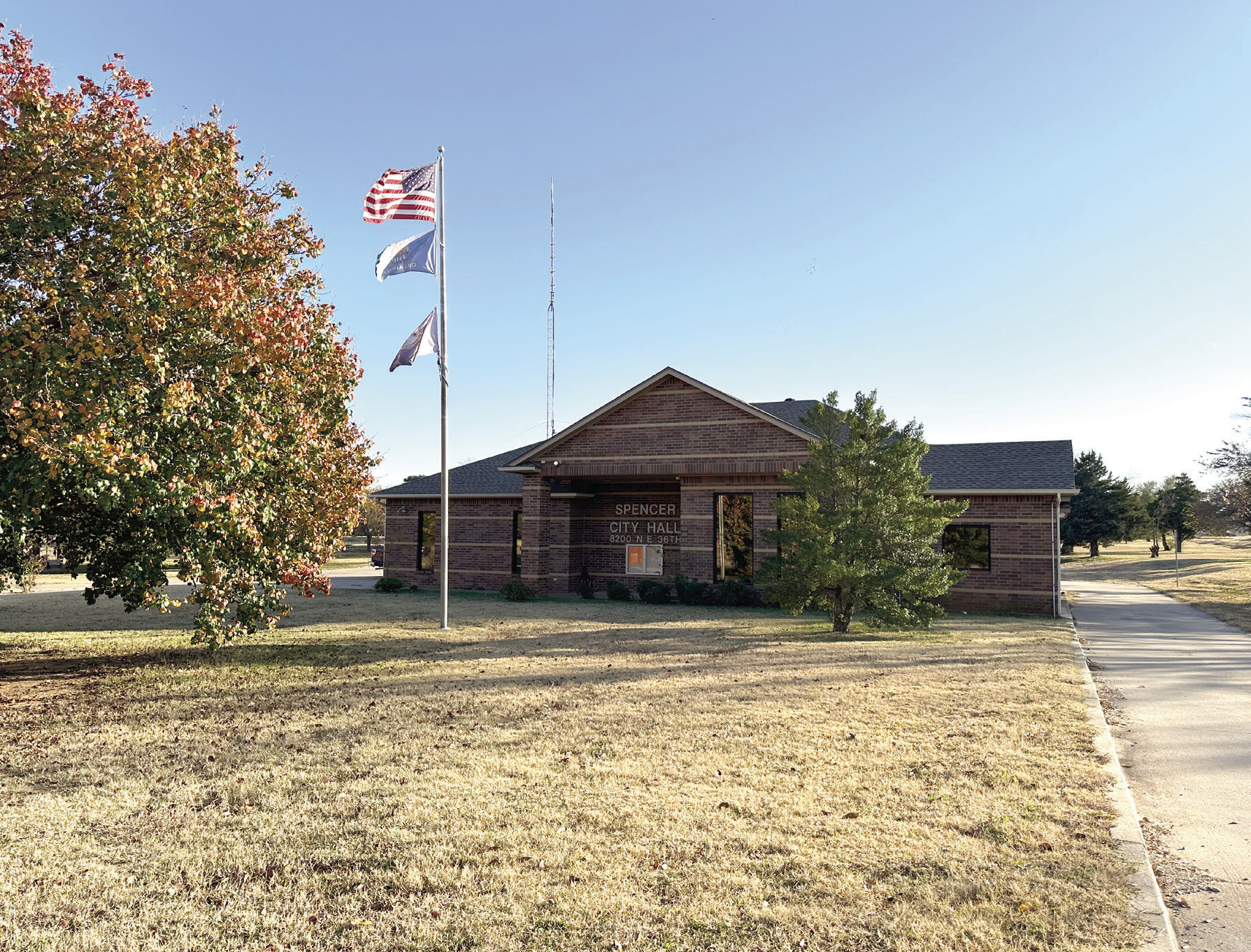
OKLAHOMA CITY – A forensic audit of the records of the City of Spencer in Oklahoma County revealed “the recordkeeping was so shoddy and unorganized, their financial issues are likely much worse than this audit report shows.”
State Auditor and Inspector Cindy Byrd said the audit uncovered years of disorganization, lousy recordkeeping, and widespread noncompliance across multiple departments. “The City of Spencer has a systemic problem with basic oversight and compliance,” she wrote.
The examination was sought after the community’s citizens submitted a petition seeking a review of seven specific concerns occurring between July 1, 2016, and June 30, 2021.
The “problematic findings,” State Auditor and Inspector Cindy Byrd wrote, included: Utility billings
• Utility customers, including some city council members, accumulated large unpaid balances, resulting in a total utility delinquency amount of more than $1.2 million.
Of that amount, $662,459 was associated with inactive accounts, auditors reported.
Of those inactive accounts, 265 of them totaling $261,699 were delinquent for less than five years “and were turned over to collections,” Byrd wrote. The other unpaid $400,760 was delinquent for more than five years and was “written off as uncollectible.”
Delinquent balances on active accounts totaled $580,219, of which approximately $322,235 was forgiven through the amnesty program.
“These large balance accumulations appeared to result from a combination of faulty billing practices, insufficient enforcement of city policies, poor recordkeeping, and lack of proper account management,” Byrd said.
• Five of eight council members routinely missed utility payments and carried large unpaid balances. Utility accounts of council members were never cut off for nonpayment.
• One council member failed to make a single payment over roughly four years, and at one point had an unpaid balance of almost $8,000.
• Among 25 city employees who were active between 2016 and 2021, utility account records were located for only four – “and even those records were incomplete.”
• Prior to January 2020, utility billing issues mounted “due to uncollected revenue, erroneous billing, and neglectful collection practices.” Utility records were “inconsistent, incomplete, and unreliable.”
Faced with a utility billing system “in disarray and unpaid utility bills exceeding $1.2 million, the city implemented a Utility Amnesty Program. The goal was “to provide financial relief to customers while encouraging future payment compliance,” records reflect.
The program authorized all active utility account balances that exceeded $1,000 to be reduced to $1,000. Customers were given the option to pay the reduced balance either in a lump sum or via a structured payment plan.
Those who declined to pay the $1,000 or failed to comply with the payment terms would be required to pay the full outstanding balance and face potential service disconnection and referral to a collection agency.
“In effect, the program functioned as a debt forgiveness initiative,” Byrd wrote.
As of January 2021, a year after the amnesty program was launched, utility account balances totaled almost $16 million. The maximum unpaid balance was a little over $11 million owed by one customer.
No official documentation could be found to indicate that the program was publicly discussed or formally approved by Utility Authority trustees or the City Council. However, a Nov. 18, 2019, email from the former city manager related that the Utility Amnesty Program would be discussed outside of public oversight in a closed-door executive session – in violation of state law.
Unpaid taxes, missing revenue,
• Beginning in 2010, the city failed to consistently remit taxes to the Internal Revenue Service. As of Nov. 29, 2023, the outstanding balance owed to the IRS was $826,206.
• Between Jan. 1, 2015, and March 31, 2019, the city consistently failed to remit tax payments to the Oklahoma Tax Commission. As a result, Spencer incurred $38,079 in penalties and interest.
• Missing revenue from court fines and fees, for the six-month period that was reviewed, totaled $46,644.
• From May through October of 2019, the city had a total cash shortage of $21,433 when comparing cash collected to cash bank deposits.
• Credit card payments totaled $148,219, but related credit card bank deposits totaled $122,908, a shortage of $25,311.
• During Fiscal Year 2019, several employees collected municipal court payments and issued receipts that were incomplete or improperly recorded. Records did not identify who was responsible for depositing the funds.
• The audit identified $523,728 in expenditures that violated the requirements of a 2020 revenue bond. Another $211,790 in spending could not be evaluated “due to insufficient supporting documentation.”
• Sales and excise tax that was dedicated to the city was reallocated to the Utility Authority by the city council without voter approval, in violation of state law.
“Ultimately, all responsibility for these problems falls on members of the Spencer City Council,” Byrd said. “Whether the money comes from taxes, utilities, or court costs, council members bear ultimate responsibility for managing city revenue.”
The findings of the Spencer forensic audit reportedly have been turned over to the Oklahoma County District Attorney’s Office. It was the 92nd audit released by Byrd this year.